My eldest daughter is not a big one for blessings, or prayers. She is not a big one for the subject of God in general. She is somewhere on the agnostic/atheist spectrum – at times willing to throw down the gauntlet that there is no God at all, but other times, unwilling to go that far. I’m okay with it; I know it is her journey, but I am sad for her. My belief in God and Love in all its manifestations are the focus of my studies, my practice and my way of life and so I used to see Keara’s rejection of God as a rejection of me and all I have tried to give her.
Now, I simply see it as a reflection of her own life experience, her natural tendency towards skepticism and a posture of protection. But every once in a while I see a glimpse of a girl who wants to believe, a girl who opens her heart and allows Love in. Ultimately, my hope is that the seed has been planted, the seed of love, protection, openness, vulnerability – that it is okay to be soft, to let the ones who love you love you in the name of something greater than they are. Ultimately, I hope her life yields an abundant harvest of Love and relationship.
I love to ritualize moments in my family’s life, and so we often do blessings and prayers as people hit certain milestones, but last night, I decided to try something different. I didn’t want “god-language” to get in the way of Keara’s hearing what we had to say.
I played a short guided Metta meditation by the Buddhist teacher, Sylvia Boorstein, with her husky voice and New York accent. It is a gentle introduction to the Buddhist practice of blessing, which involves the simple repetition of these four lines, beginning with yourself and radiating out to others.
May you feel safe. May you feel content. May you feel strong. May you live your life at ease.
That’s it and yet, it says almost everything. In safety, we do not act out of fear and all the negative consequences it brings. In contentedness, we are not greedy, grasping, envious, or backstabbing. When we are strong, we protect the weak, not just ourselves. To live at ease does not mean we live without suffering, but rather, that the end of the story is already assured.
We sat through the guided meditation as a family, each of us in silence, and in our own space and then we gathered around our daughter and sister, the one who is leaving our shared space, and we blessed her with the following words.
May you feel safe. May you feel content. May you feel strong. May you live your life at ease.
And in those moments when you cannot feel safe, content, strong and at ease, then may you take a deep breath, center yourself and draw on the resources you’ve been given.
Remember your gifts, your talents, your deepest desires and what you are working towards.
Remember your history, what you have accomplished and the obstacles you’ve overcome.
Remember your family and friends whose Love will never waver and whose support you can always count on.
Remember that Love is your birthright, the place you came from and the place you will find your home.
For it is there that you will find the freedom to become most fully yourself, and committed to your future,
Where you will find the courage to embrace hard work, to overcome setbacks, to process your confusion and disappointments and learn from them.
May you always come home – to yourself and who you truly are – gloriously Keara Moses Kirkpatrick, a creative, passionate, determined soul, who is a gift we call our own.
Amen.
Amen, Keara. That is our wish and our blessing for you as you move into your own space in the world, physically, spiritually, and professionally. You know where to find us whenever you want to come home.
I had dinner with my darling (birth) daughter Sarah last night. She is heading off to graduate school at LMU next month, on a full scholarship. She also just rented her first solo apartment in Manhattan Beach. She’s excited and terrified about beginning to build her life as an independent adult. We both brought a book to the bar, because what else would you do if you had to wait ten minutes? She brought crosswords; I brought The Heart of the Buddha’s Teachings by Thich Nhat Hanh. She looked at my book and laughed.
Sitting across the table from her, the beautiful difference in our age and stage was clear. “I’m looking forward to the day when I want to work on my spiritual progress,” she said, making some sort of flapping gesture with her hands over her heart, “That’s great. I’m really happy for you.”
And I think she meant it, but it’s always hard to tell with Millennials.
But I took the opportunity to share my favorite Buddhist metaphor with her – well, I think it’s Buddhist, but since Thich Nhat Hanh is pretty much the only Buddhist I’ve read, it might just be “Hanhist.” It’s a metaphor that works on me all the time, or at least when I remember it. I just wish I remembered it every day.
Imagine a wave in the ocean as it approaches the shore. That wave has existed for miles and miles. It began across the sea, perhaps even across the world, but as it finally becomes visible, it becomes conscious of itself and it begins to worry. How good am I? Am I the biggest? The prettiest? The strongest? Are they taking pictures of me? Am I surrounded by other waves? Will I always be alone? Am I useful to people? Do they find me fun? Terrifying? Are they mad at me for washing away their sandcastles? How much longer do I have to live? Can I be all the wave I was meant to be in these too brief moments of time? What will happen to me when I’m gone? I…must…hold…on. All of this chatter is the wave suffering, because it thinks it is separate from the water.
But if the wave could just recognize that it is water, that it came from water and will return to water and never stopped being water, then its suffering would cease. It will stop over-identifying with its wave-ness. It can simply enjoy its temporary form, knowing that all along, it is still the water.
“Okay…,” Sarah said, nodding her head, “I can see that…” And she moved on.
She totally could not see that, which is why she said, with great honesty, that spiritual growth was for someday, down the road for her. Like Keara, her younger half-sister, honesty is one of their strongest policies. But because the girls love me, they also do it kindly, which I deeply appreciate. Kind people are some of my favorites.
But the wave/water metaphor is something that is working on me deeply. As a writer and teacher, it is so easy to get caught up in how my “wave” is being received. It feels especially true in this time of social media-driven audiences. Each opportunity for a like, a share, a repost, a retweet, or a positive review is an affirmation of your “wave-ness.” It’s practically the only game in town for artists like me, but I think it’s true for everyone. From eight-year-olds to octogenarians, we all want to be affirmed. But we try so hard to be waves that we forget we are water.
I love writing this blog, but there are so many successful bloggers out there, so many writers and authors and vloggers, pastors and preachers, speakers and teachers that I admire and who seem to make a difference in the world that when I look at the scope of my work, I feel like the tiniest little toe-lapper on the banks of Mission Bay. Not only am I not even a real wave; I’m made of polluted water that most local residents won’t even touch. And I look at all the other waves and want to be like them and make a powerful, beautiful, and useful splash.
And so after another disappointment, I collapse into a puddle of tears, ironically still forgetting that I’m water.
I have my coping mechanisms, the first of which is to look for Tim, my husband, the surf-shop owner. As a life-long surfer, he’s good at judging the waves and he thinks the world of me, so his answer’s a sure thing. He builds me up, tells me what a good wave I am, how smart, how kind, how talented and loving, and how much my kids benefit from riding in my wake. He reminds me that even if my wave never gets any bigger, it’s okay. I’m the perfect wave for him and the people I love.
Okay, so he doesn’t actually talk in similes, but you get the picture. After several of these pep talks, I can begin to feel my wave-ness again and I am ready to hit the shore. But you’ve been to the beach. You know what happens.
I don’t need my Buddhist buddy to point out that this “I’m a wave” thing is unsustainable. The pattern repeats itself and I crash and disappear, over and over again, in a big frothy mess of self-doubt, snot and tears.
The reality is: I don’t need a coping mechanism. I need the truth.
I am water, not just a wave.
And as an ocean girl, I like the idea.
Practicing it, however, is awful.
Giving up finding my worth in my own self-identity is really difficult. If I really believe that the wave is always water then it involves disassembling a lifetime of culturally-constructed images and measurements of success. It means gracefully accepting the disintegration of my physical self. I am not the tall, thin, blonde that was sitting across the table from me last night. I resemble her; I used to be her, but now there are wrinkles and sunspots and saggy bits when I wear a bikini. My body doesn’t work the way I want it to. I can’t swim, or play, or even throw a football without paying for it the next day and I know that’s just beginning. It means dissolving my standards for achievement, including being rewarded, financially or otherwise, for what I do. I always thought that I would do something important, but I can’t even figure out what I want to be when I grow up and I’m well past that point. My teenagers seem closer to figuring it out than I do! I find myself randomly searching Craigslist for a job that requires my strange grab bag of skills – well-read, conceptual organizer, multi-tasker, strong oral and written communication skills, no professional references. The Starbucks barista listing seems like the safest bet. Finally, it means allowing my own agenda to disappear as the driving force for my life in the world and interactions with others. I have to let the water take me where it will, and use me as it may. I used to think it was easy to “go with the flow,” but in this case, it entails the painful erosion of my ego and false self-confidence.
Upon reflection, I can see why Sarah is putting off this spiritual journey. It sucks, but I can’t see any other way forward, only back.
Do you remember when Jesus gave the teaching in the Gospel of John that his followers had to eat of his flesh and drink his blood to have eternal life and virtually everyone left and he looked at Peter and the twelve and said, What about you? Are you leaving too? And Peter looked back at him and said, “To whom shall we go?” What other options did they have? I can just picture Peter looking balefully at Jesus and shrugging. They weren’t looking forward to the feast, but when the Truth is before you, what can you do?
I am reading The Heart of the Buddha’s Teaching as part of my Living School curriculum. Though in different language, Hanh’s metaphor says virtually the same thing as every Christian mystic: We have to let go of our separate identity, and fall into the Love of God from which we came and to which we will return. In a dance of cosmic coincidence, I read these lines from John of the Cross just this morning during my meditative reading. He wrote “Beloved, please remind me again and again that I am nothing…Plunge me into the darkness where I cannot rely on any of my old tricks for maintaining my separation.”
The wave calls out to the water in the voice of a 16th century Spanish mystic.
I don’t know about you, but I am much more comfortable with the 21st century, natural language of wave and water. In fact, I think it’s only by understanding the teaching of Thich Nhat Hanh that I can approach John of the Cross with an open heart and mind. Reading the great mystics of all the religious traditions has brought me to a deeper understanding and appreciation of those in my own spiritual home.
Tim and I have a date planned for tonight after work. We are going to the beach. We will surf with our bodies, and on our boards. We will play in the waves. I will ride down their faces and let them tumble me head over heels for the sheer joy of it. I will honor their beginnings as I float over their swells and their endings, as they dissolve one by one at my feet, becoming indistinguishable from that which they always were. I will mourn for them, like I mourn for myself, for clinging to all that I think I need to be worthy and worth noticing. And when we are done with the waves, we will swim past them and float in the expansive water. I will lie on my back, with my face to the setting sun and I will remember that I am both.
I am a wave and I can cherish and love the ride, but I’m not just a wave. I have always been and will always be part of the water, God’s creative, generative, and never-ending Love. And I know the pattern is not over, that my waves of desire will never cease to rise and fall, sending me head over heels, back down to my knees. But tonight at least, I will try to remember I am water.
Team Kirks: Me, Finn (16), Molly (13), Tim and Kiko (18)
This past week, our family was at the Happiest Place on Earth: Family Camp at La Casa de Maria in Montecito, CA. We’ve been back for three days, but I’m just now coming home to Gabacho Drive, here in sunny San Diego. I’ve been working and cooking and cleaning, but until this afternoon, I was just going through the motions. My head was in the clouds and my heart was broken, with pieces of it scattered across the state, carried off by the people I love. Some of them I’ve known since the day they (or I) were born, some I met just last week.
Heartbreak is a funny thing, because it can happen by Love or sorrow, with tears of joy, or pain. But both kinds take time to heal and regardless of the cause, you are never the same again. After three days of centering prayer and reading, after seeing and talking to my people back home, most of my heart is back in my chest, but not all of of it. That’s one of my favorite things about camp; if your heart is open and you are willing, you never know how you will be put back together again.
I’ve written a few times about Family Camp- you can catch up here and here – but to be clear, here are a few more things you should know.
My family goes to Family Camp, but Family Camp isn’t just for my family. Some of us share a name, or DNA, but most of us don’t.
It is called a Christian family retreat, but that doesn’t mean it’s denominational, evangelical, or fundamentalist. Our “fundamentals” are Love, forgiveness, inclusion, acceptance and healing, as exemplified by Jesus the Christ, but our “good news” is that we’re all in, baby!
Unlike retreats put on by industry professionals, Family Camp is run by a team of volunteer families who draw on their own gifts, experiences, faith and forty years of tradition to create a safe place for families to draw closer to each other and God.
I had two opportunities to speak and share my ideas this past week, and many opportunities to listen and learn and since you weren’t all at Family Camp with me, I thought I’d share a few of these moments with you. Today will just be something I shared, but I hope to gather a few more thoughts from my friends who also spoke.
The theme for this past week was Seasons: the seasons of the year and the seasons of our life, what they offer us and how we might approach them. We began with Summer, worked our way through Autumn, and Winter before being reborn in Spring. The artwork and presentations were beautiful in really creative and non-professional ways and I don’t mean that as a dis to our team, as much as a reminder that we aren’t putting on a show, so much as creating a loving, but imperfect home.
Our family, along with my brother and his wife, was in charge of talking about Summer, which was perfect. Summer is our season, our jam, our raison d’etre. We are surfers, swimmers, lifeguards. We love water and waves, the sandier and saltier the better. As you can imagine, we talked about Joy; we talked about Abundance; we talked about Sabbath and Gratitude. But we kept it real; we also talked about all the less pleasant seasons that come before summer, the winters when you are frozen by disappointment and fear, and the springs that melt your heart just a little bit. We also admitted the downside of clinging to the summer season and resenting anything that darkens our days. (Mea Culpa!)
For my own growth and benefit, that’s what I tried to focus on in my talk – how to be grateful, everyday, for every moment, and every season, no matter what kind of weather I’m in. It’s a practice I’m working on, all the time, and I thought I’d share it with all of you.
Gratitude for Seasons 2015
This past year, I began studying the mystics from the 17th century Spain – John of the Cross and Theresa of Avila – and while they are beloved by many in the Catholic Church and everyone raves about them, I don’t think most people have actually read them. I think they love the idea of them, the quotes that have been pulled out and put on holy cards, or the saint’s lives they heard about them growing up. I think this is true, because when I actually read John and Theresa’s work, I really struggled with them, especially with their depictions of God. This God they loved so much was a God who would come and then go, who loved them and then left them, who seemed to punish and then reward them. I just didn’t get it. While I understand that is what we feel like God is doing sometimes, it isn’t what I actually believe is true about our unchangeable, all-loving God and so I brought my questions to my spiritual director and after we talked about them for while, she said, “If you want to know what God is actually like, look at nature. If you can find a parallel there, it will be true.”
Now, I don’t know if that is entirely accurate, but I started looking and it did help me see God in a new way, in the joyful nurturing of the small, wild animals in my yard, in the majesty of the NASA photos I follow on Instagram, in the vastness of the ocean I float in, but especially through the seasons. There are times in our year when the sun is closer and there is warmth and abundance and seemingly never-ending days. The nights come, but they are moderate in temperature and short in length. But there are also times when the earth has moved away from the sun and darkness seems to be prevalent, and it is uncomfortably cold, and nothing grows and we struggle to survive and we feel like it’s the end of the line for us and sometimes we feel abandoned and angry, or scared.
But it isn’t the sun (or God) that has changed positions, but the earth (or us) who moved. And it isn’t like the earth moved away because it was bad, or mad, or mistaken, or sinful. It just did; it’s the natural, cosmic pattern; it’s the way the universe works. You can count on it and this pattern is actually the very thing that allows life to exist, for our world and for our own selves to grow and evolve and thrive. Perpetual summer would lead to death, just like a perpetual ice age.
And of course, in addition to summers and winters, there are all the in-between times – the falls and springs that have their own beauty and their own pain, but whatever season we are in, we know that it is not the last season; there is another one right on it’s heels, as soon as we get comfortable and used to the one we’re in, or right when we think we can’t stand it for another day, for better and for worse, the season will change; life will move on.
At the very beginning of our day, we talked about the fact that summer time for a lot of people is about JOY. It’s about moments of unbridled laughter and bare feet and sweet, cold ice cream and family reunions. It’s also about ABUNDANCE – the sense of the “enoughness” of life that comes about in this season – that all the things we really need are actually right here, even if it’s just taking a deep breath standing outside with your feet in the grass and the setting sun on your face. Tim talked a lot about the concept of Sabbath – of learning to take a break and protect your down time, so that each day is filled with the things that really matter. (I’ll catch up on that part later.)
And so if we are in a SUMMER time of abundance and joy and we have the sabbath space and time to reflect, then the natural response of our heart is going to be gratitude. And that’s what I want to talk about today.
Gratitude is one of those words and concepts that has been talked about so much and is so overused that I was tempted to chuck the whole concept.
Kids- How many times have you been told by your parents, “How about a little gratitude? Quit being so ungrateful! Who has a grateful heart?”
Parents – How many times, in your hardest parenting moments, have you heard the voice in your head reminding you how LUCKY you are to have kids, even when they are screaming at the top of their lungs and leaking fluids from every orifice? How grateful you should be for every moment of their young lives, because time flies by? And how you will never get these days back to be grateful for every one of them?
Sometimes, we hear the word and we just go, “ugh.” But Gratitude is so important that I thought I’d try to bring a fresh perspective to it, because it is going to be a theme of the week- finding something to be grateful for, something to appreciate about each season of life we are in – no matter what it is, or what’s going on.
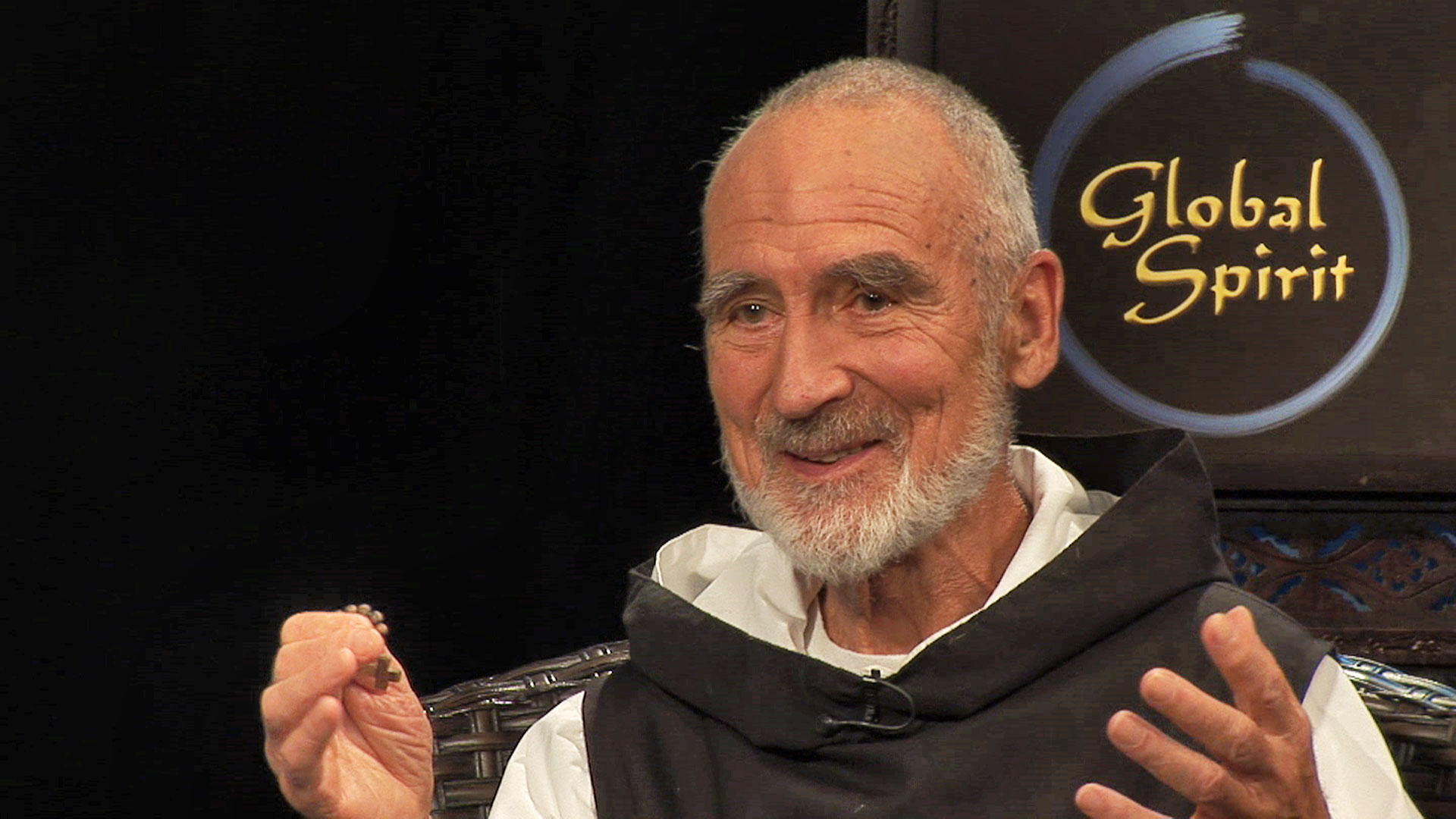
So I went where I always go for good ideas and found a TED talk by David Steindl-Rast, an Austrian Benedictine monk and he asked a really good question of his audience and I’m going to ask it of all of you.
Brother David Steindl-Rast
He asked, “Are happy people grateful, or are grateful people happy?”
The answer is YES. They are both true, but not in the way we might originally think. Our default setting, our instincts tell us that if you are happy, you will be grateful. And if you are happy, it’s because you probably have a lot of things going right for you, but that is dead wrong. Some of the most miserable people in the world are the ones who seem to have the most to be happy about! They have all the money, the opportunity, all the privilege, all the connections and fame in the world. Everything the media tells us will make us happy doesn’t move the needle a bit.
And sometimes the happiest people in the world have almost nothing.
Gratitude is the X factor. It doesn’t matter how much or how little you have. If you have gratitude, you can be happy.
You can’t choose to be happy, but you can choose to be grateful and if you start with gratitude, and live in a space of gratefulness, you will be happy.
And summer is a time when it’s easier to be grateful, for many of us anyway and especially most of us under the age of 18, who get to be on summer vacation, or those of us who live in California.
Because gratitude comes in two forms –
Sometimes gratitude happens spontaneously and we call these – Gratitude Events.
A gratitude event is when we receive a gift – something we value – freely. We didn’t earn it, expect it, work for it; it just showed up. So that might be a really generous birthday gift from our parents, or an invitation to the movies and a sleepover from a new friend, or flowers from our spouse, but a Gratitude Event could also be a beautiful sunset, the smile of a newborn baby, or a spontaneous hug and kiss from our normally reserved kid. In those moments, gratitude just springs from our souls. Out of nowhere, a gift was given and our natural response is an upwelling of gratitude.
For me, summer is full of those Gratitude Events. I won’t even list them all here, but you saw a lot of them in Tim’s video. Readers, you don’t have to watch the video, but it does capture some of my very favorite moments of being a part of Team Kirks.
Whatever your internal thermometer is that tells you “your special season” – mine is set to summer. How many of you know what I am talking about? It’s like your Gratitude Event Meter is just pinging over and over again, all day long. How many of you have your gratitude event meter going off the charts in summer? How about Christmas time? Fall? The riot of color in a garden in spring? We all have a season, in the year and in our lives, when it’s easy to be grateful and that’s awesome.
A sharp spike in our Gratitude Meter makes it so easy to be grateful and happy, but it’s unsustainable and so when the events aren’t rolling in, we can tend to get sad, feel deprived, or depressed and that’s a problem. And when it takes more and more to surprise us and make us feel grateful, that’s a problem too. How many of you have friends who seem to have everything they could want, certainly everything you want, and yet, they aren’t happy? They’re Gratitude Event setting is way too high.
That’s why the other type of gratitude is even more important. According to every religion, every spiritual authority, every faith tradition, every positive psychologist,
We need to learn Grateful Living – which is realizing that EVERY moment of our lives is a gift from the Universe, a gift from God.
It’s something we didn’t earn. Every breath we take is a gift, and if we can learn to be grateful for that breath and then move even beyond that, we realize that in every moment we have the opportunity to find something more to be grateful for.
Paul Williams – the guy who wrote “Rainbow Connection,” Kermit’s theme song – is a recovering addict – who’s been sober for 24 years now and he wrote a whole book called Gratitude and Trust and he said that apart from his children, his sobriety – just waking up and breathing and existing on his own, without any assistance from drugs and alcohol – is what he is most proud of. After hitting rock bottom, he said,
“I’m grateful for everything that has happened in my life – the good and the bad.” And that’s the way he lives his life. “If you’re in a car wreck, you’re grateful no one got hurt. If someone got hurt, you’re grateful they didn’t die; if they die, you’re grateful for the chance to know them. It’s expandable – gratitude – one size fits all, so put it in your heart and use it.”
That’s the thing about gratitude. You only need to start with one small ounce of it and it immediately begins to build on itself. If you can find one thing to be grateful for, you can find another and another.
I want to share this poem by Carrie Newcomer with you. Though I read the poem during my talk, click on the link here to hear Carrie read it herself. Seriously, watch the video below. Hit start, close your eyes and enjoy ninety seconds of her beautiful voice, reminding you of all the simple, precious things in a life.
And after the poem, look at this.
People who wonder if the glass is half full or half empty miss the point. The glass is refillable.
Whatever you want in your glass – you’ve got it and if you want more of it, it’s on the way. If it’s Joy or Gratitude, or Resentment, or Anger, or Envy, you’ve got it. It’s your glass. Each of us get to decide what gets poured in our glass.
As the mystic, Theresa of Avila, said, “It’s heaven all the way to heaven and hell all the way to hell.” (And yes, that’s the mystic who drove me crazy just last year!)
You want more happiness, gratitude, abundance in your life? Just fill it up! It may sound stupid, but it is a proven psychological phenomenon. Gratitude is an ever-expanding emotion. If you can find just one thing to focus on and be grateful for, then you will find another and another and another. Like Carrie Newcomer’s poem, it builds from just one simple deep breath when you can say, ”I am grateful for this breath, for the fact that I am alive and in this moment, I am not suffering. There is nothing I need.” Richard Rohr defines suffering as “anytime you are not in control.” We can all think of a dozen ways we are “suffering” right now, but we can also close our eyes, take a deep breath and realize that right here, in this moment, we have an abundance of everything we need – warmth, air, food, hydration, companionship, rest. We might not be suffering at all.
David Steindl-Rast said the practice of Grateful Living can be taught, just like we were taught to cross the street when we were kids –What do you do when you get to the curb? You STOP, and then what? You LOOK both ways and then you GO.
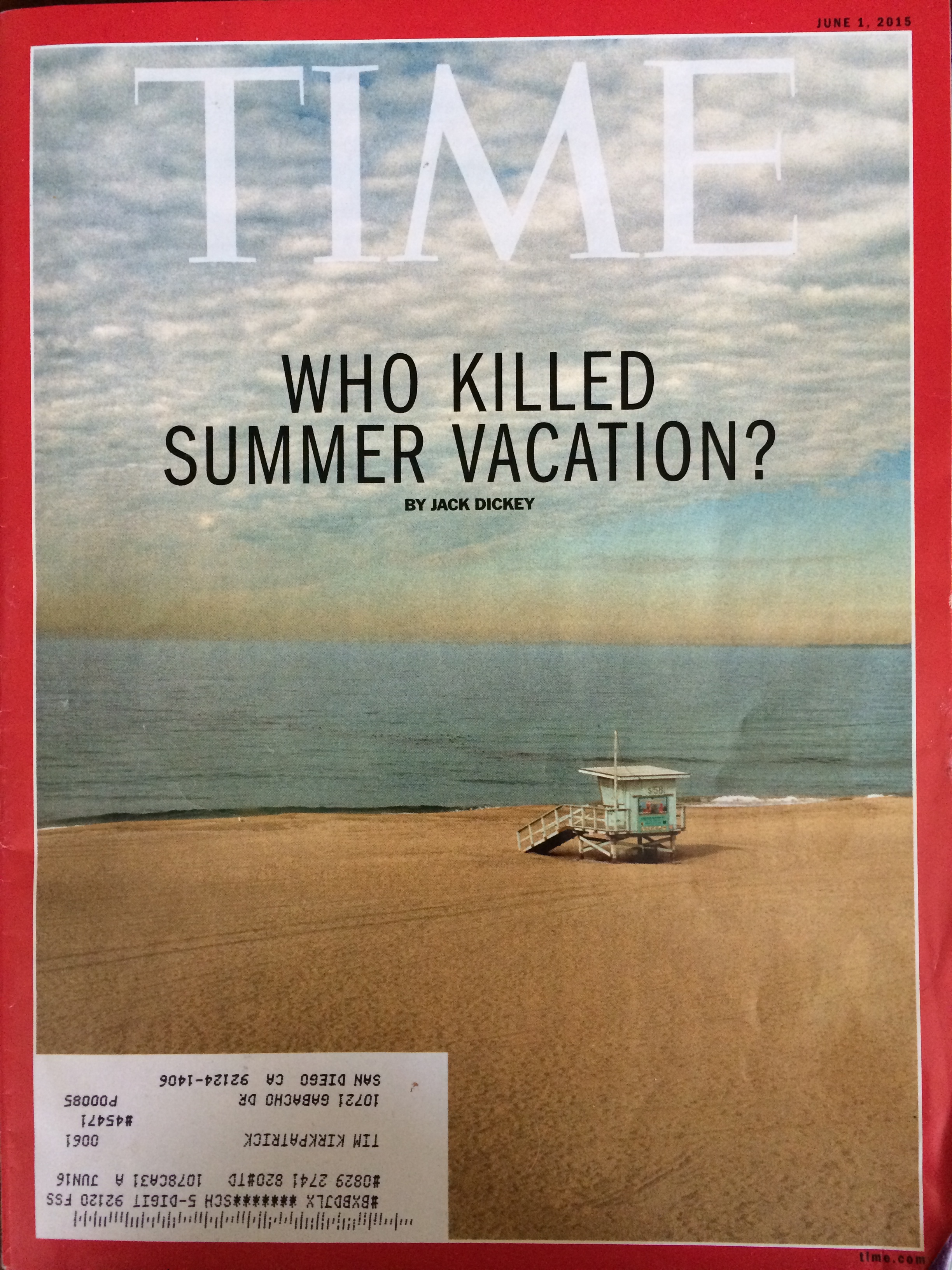
The reason we don’t all live gratefully and therefore happily is that most of us – not necessarily most of us here, but maybe some of us here- forget to stop. Just like it said on the Time
Seriously, who killed it? We did.
magazine cover – we GO GO GO. All the world is go go go. And to be truly happy, which is to be grateful, we need to stop, instead of rushing through everything, trying to get to the next thing on our list, on our way to our goals. Steindl-Rast suggested we make stop signs for ourselves to remind us to take a deep breath. They can be mental ones – like prayers – when we wake, or at dinner, or bed time – when we can find, not just a general thank you, but a specific thank you. But they can be actual stop signs too. When he came back from living in Africa, he didn’t want to forget what a miracle it was to have clean, running water again, so he put a hand-written stop sign on his water faucet and on his light switch to remind him of the miracles of his life. We could put one on our mirror – dirty clothes hamper – steering wheel – computer screen at work. Once we have stopped and taken that first breath in front of the very thing that we take for granted, for which we can be grateful, even if it aggravates us, we can look around and find something else to be grateful for – the clean water, the electricity, the semi- healthy body that gets us around, even if it has wrinkles, the too many clothes we have to get dirty, and the washing machine we have to clean them, the car, the job, all of it and finally we GO; we embrace the moment and find JOY in it. When we enjoy it for that moment, it’s possible to have that gratitude inform and affect the rest of our day.
One of my favorite poets, Mary Oliver, says it beautifully and simply:
Of course, Brene Brown shared the idea. She’s full of ideas.
In virtually every moment, there is something to be grateful for. That does not mean we have to be grateful for the bad things, the evil and tragic things. I don’t believe that. And if we find gratitude in the midst of bad things, it doesn’t mean we are glad they happened, or that the good outweighs the bad. It just means that even in this tragedy, in the midst of this hate, I can find some glimmer of Love, some glimpse of God. I think that’s what Jesus did on the cross when he asked God to forgive his murderers. Forgive them God. He found something to overcome the negative, even in his last breath, so that he could say in trust – Into your hands I commend my spirit.
That is how I want to go, gratefully, free of hatred and resentment, and if that is the way I want to go, then that is the way I want to live.
A line from recovery that I’ve heard is that you get to keep the gift by giving it away. And believe it or not, that is true of joy and gratitude, and love and kindness too. It’s been proven that it is almost impossible to sustain positive feelings if you keep them to yourself. You can keep your anger, your hatred, your resentment and doubts, all to yourself, all day, every day and they will grow and fester and flourish, but that’s because they are burdens. Gifts – love, joy, happiness – multiply if they are shared, given away and the more abundantly you share them, the more you have, until you finally realize there is more than enough.
So I have one final thought. and as a mother, I know it’s true: we protect what we love.
And I would just like us to think about the fact that if we aren’t consciously grateful and aware of the preciousness of the things we love, then our love can become habitual, and possibly even taken for granted, like a favorite old sweater, or stuffed animal, or favorite childhood story. You love it, but from distance, in your memory, or the image of what that thing is. And so staying actively grateful – conscious of the specific, ever-evolving nature of the people we love and the things that bring us joy, the people and things that make us feel whole, alive, excited – is so important. If we forget to love them actively, then we will forget to protect them in our hearts and minds, and even especially with our time. We want to Love well, protect well, enjoy and appreciate our lives and our relationships well, because we know what can happen if we don’t. We see it everywhere, all over – in families, neighborhoods and nations and across the world.
I want to end with this song, “Grateful,” by a man named Nimo Patel, who has devoted his life to sharing a message of Love, service and gratitude. I especially love the chorus, which goes like this: All that I am/ All that I see/ All that I’ve ever been and all I’ll ever be/ Is a blessing/ It’s so amazing/ And I’m grateful for it all.
I’m grateful for it all.
For all of you: for old friends and new, for the family we are and the family we will become, for the life I have and the life I have yet to live, I am grateful. I have failed and will fail a million more times, but “There’s a million things to be grateful for,” and I don’t want to miss a moment, caught in fear, or self-pity, or resentment. So, every day, I will try to stop and breathe, look and go, hopefully, in gratitude.
Remember that broken heart I talked about at the beginning of this blog? More than anything else at Family Camp this year, my heart was broken open by gratitude for the people I met, the Love I experienced, the stories and laughter and tears we shared. I was fully me, fully alive and aware of every gift: every baby’s smile, every toddler’s tears, every teen’s presence and every friend’s fierce hug and I thank you for it all.
If you are interested in learning more about Family Camp at La Casa de Maria, you can go to the website here.
This is a post that has been begging to be written for weeks now, but it’s something I’ve been putting off, perhaps because writing about it makes it far too real.
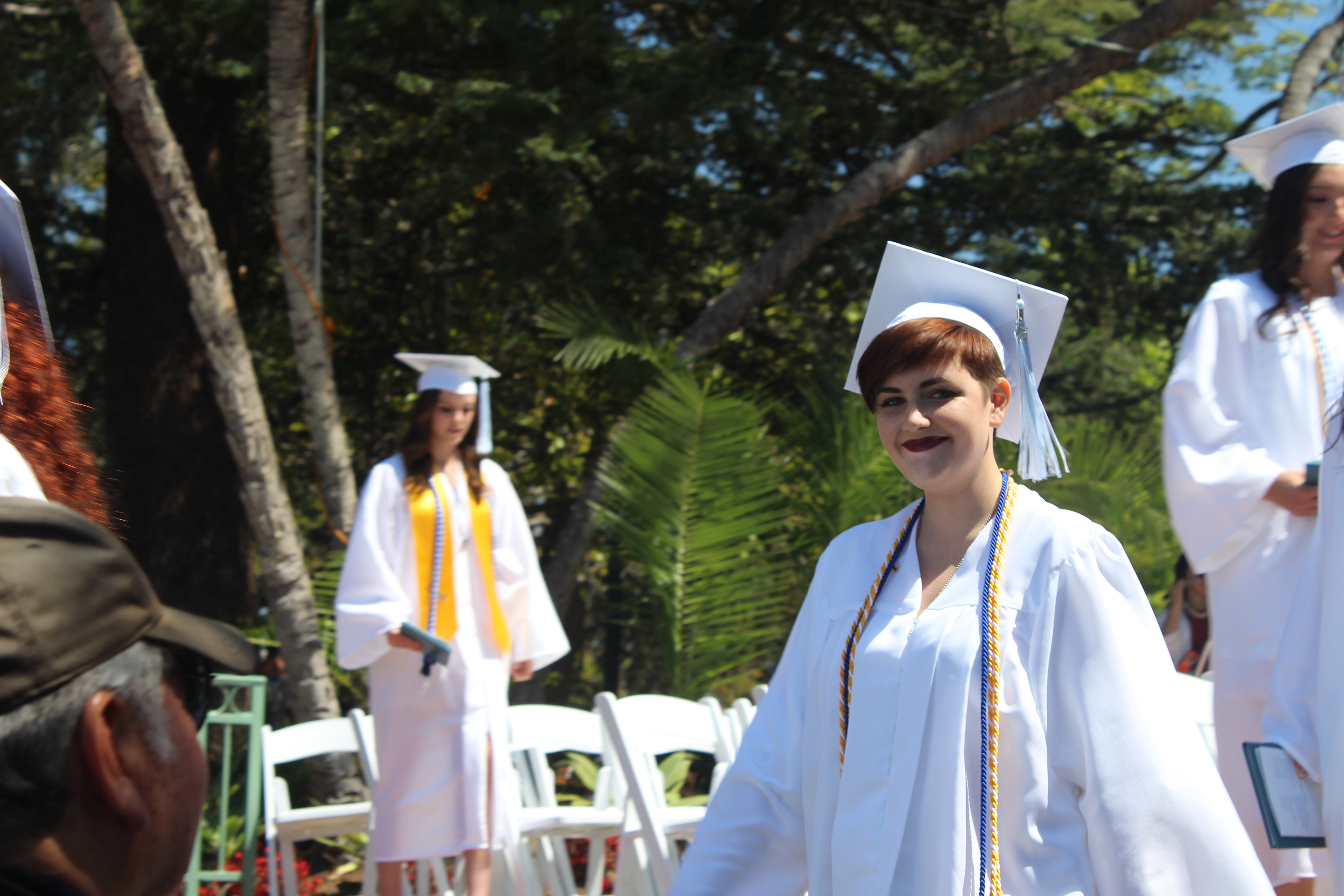
Two weeks ago today, my sweet Kiko, known to the world as Keara Moses Kirkpatrick, graduated from The Academy of Our Lady of Peace. In just over two months, she will be going away to college. As individuals and as a family, we are in a time of transition. There is joy and sadness, eagerness and anxiety, hope and nostalgia for all that has been and all that will be.
We attended a beautiful ceremony at her school, but I am a big believer in rituals, so we couldn’t leave it at that. While both ceremonies and rituals use words and actions to mark the significant events in our lives, they operate on different plains. Ceremonies signify the outer experience; they are the stuff of photo opportunities and awards, for public consumption on a large scale. Rituals take place in more intimate spaces, sometimes with no more than one, or two present. Ideally, they speak to the interior processes that the ceremony celebrates. Rituals can be sacramental, in the broadest sense of the word: personal, grace-filled moments that transcend our every day experiences. Ceremonies can be organized by anyone; rituals are best experienced by those we love.
One of my favorite rituals is to write my kids letters, annually on Holy Thursday, but also for significant events in their lives. It offers me an opportunity to look back at what they’ve done and who they’ve been, as well as dream about who are they are becoming and what they might do. Sharing those letters with my kids, out loud and sometimes in the presence of others, is always a sacred experience. In case they had forgotten in the course of their daily lives, they are reminded of the power and possibility of their own story.
At Keara’s graduation party, with our family and close friends gathered around us, I toasted her with the following speech. I am posting it here, not only to share my own pride and joy, but also perhaps to inspire you to find a way to “ritualize” the next milestone in the life of someone you love. You don’t need to worry about being particularly eloquent, or using a lot of words. They don’t even have to be your own. Your favorite poet, or songwriter might know just what to say. If you’re nervous, allow them to do so. The important thing is to find some special way to connect what has occurred on the outside with what is happening on the inside. An expression of your Love and perspective may be the very thing that propels them forward with greater joy, confidence and determination.
Graduation toast, given on May 30, 2015
A couple weeks ago, Keara went on retreat with her senior class at OLP and they asked her parents to write her a letter. I thought today might be a perfect day to share some of my thoughts from that letter with all of you, her family and friends, who love and support her and have watched her grow over the years.
While I was writing the letter, I was listening to “Never Grow Up” by Taylor Swift and reminiscing about all the stages and ages she’s been through over the last eighteen years. She is on the verge of going to college, moving out on her own, for a while at least, and maybe forever.
The first age Swift talks about is infanthood, with “your little hands wrapped around my finger…” I still remember those days, when I held her in my arms ALL THE TIME. She was only happy being held in my arms or Tim’s, and even then not always. But she quickly became a happy baby, big smiles, big love all around. As all of you know, Keara was a priceless gift to me – my daughter, the one I got to keep and raise and hold and love and dress and play with. Keara, even though I had your dad, until I became your mom, there was a little bit of an emptiness in me. But your presence filled me up and gave my life more meaning and purpose and great, great joy.
Taylor Swift goes on in her chorus to say,
“Oh darling don’t you ever grow up, don’t you ever grow up, just stay this little. Oh darling don’t you ever grow up, don’t you ever grow up, it could stay this simple. I won’t let nobody hurt you. Won’t let noone break your heart. No, no one will desert you. Just try to never grow up. Never grow up.”
Though the teeniest part of me sang along with Ms. Swift, I’ve never clung to the chorus, or the meaning of her song with you, or Finn, or Molly. Even when you were just toddling around, I couldn’t wait to see who you would become and what you would do with your life.
The possibility of you has always been endlessly fascinating to me.
You have become all I hoped for and more. In elementary school, it became clear how smart you were, how disciplined, how engaged, how fun-loving. Your teachers all loved you and you had good friends. Some of them moved away and some friendships faded and my heart broke a little to see your confusion and sadness at the loss of relationships you had invested in. You didn’t want to talk about it, but I knew and tried to support you with love and encouragement. And you always managed to find new friendships that were even better, because you have such a good heart, imagination and willingness to engage with people.
I know that pattern has repeated itself in high school as well and I hope you know it’s okay. Although it’s not the way friendships are “supposed to go,” according to Hollywood and TV shows, it’s actually true of most people’s life experiences. Friends come and go. If you are changing – and I hope you are always changing – then friendships will change too. People grow in different directions. When something dies, even relationships, it becomes the soil from which something new, something richer can be born. (I will stop with my usual lecture theme now. I can feel you rolling your eyes!)
When you went to middle school, I watched you step into your individuality even more, or at least try to find it. Like T Swift, I would have liked to say to you, “Don’t lose the way that you dance around in your pjs getting ready for school.” You did lose it for a little bit, but through the last four years of high school, that joyful, funny, smart, playful soul has resurfaced and you will dance around in your pjs (or anything else), at any time of day or night. It makes me so happy when I see the little girl you once were, in your smile and laughter as you move.
I wish that I could say that, like Ms. Swift claims that “No one’s ever burned you; Nothing’s ever left you scarred,” but I know that’s not true. I’ve seen you hurt, but I’ve also seen you rise again, every time. You know how to cry, but you also know how to start over. You know how to pick yourself up, put on your lipstick (the feminine sword and shield) and go back out there to be an even stronger, more resilient, and confident woman.
I hope I’ve earned your trust and that you will allow me to stand by you forever, as your mother and as the woman who loves you most in the world, as someone who will always encourage you and lift you up in Love.
I will always, we, this family, will always, always, always lift you up in Love. We will always be loyal to Keara Moses, who we fell in love with before she was born and will love beyond this life.
There are things I think you are and will be forever, Keara. The young woman I know, Love and respect is independent, funny, creative, talented, compassionate, smart, passionate and fiery. I could also include your inner strength, confidence, individuality, determination, independence, and ability to stand out in that list of qualities. None of those gifts came easily to you and I recognize the work you’ve done to become the person you want to be, the kind of woman you admire. You also have interests that I love to watch you involved in, like baking, sewing, music, costumes, makeup, hair, fashion, acting, dancing and the list goes on…
Let me just say that these lists are incomplete, for your life is only beginning. The first eighteen years of life are formative and fun and filled with memories that shape who you will become. But the next sixty and seventy years ahead are also those things. Life is incredible raw material for meaning, purpose, passion and happiness and I’ve seen what you do with raw materials: You create beauty! It’s unique, a little dark around the edges, but fantastically powerful. You’ve done it in all sorts of mediums and so I have total confidence that you will do it with your very self and the life you’ve been given.
“Never Grow Up” ends like this:
“Take pictures in your mind of your childhood room. Memorize what it sounded like when your dad gets home. Remember the footsteps; remember the words said, and all your little brother’s favorite songs…”
Take your memories with you throughout life Keara and I hope they are more good than bad, but don’t look back with longing or regret. Your future holds so much promise and joy. I could not be prouder of the daughter we’ve raised and I know you will continue to do great work. We believe in you and are here for you, always.
Cheers!
In this time of graduations and weddings, “Cheers!” says something, but your Love can say a lot more. Don’t be afraid to speak up. We need to. We assume our loved ones know how we feel about them, but they don’t, not really, unless we told them yesterday.
All of us, not just our children, long to be seen, in our joy and pain, to have our triumphs applauded and our struggles encouraged. A kiss on the cheek, a hug on the way out the door, a mumbled, “I love you,” can’t possibly communicate the depth of our feelings for the complex, beautiful people we live with and among. So when the next occasion arises, or perhaps for no occasion at all, find a way to say more than comes easily and make the moment a sacred one.
The viral post on Huff Post Education, “Message to my Freshman Students,” really got to me, and not in a good way. As an educator, it’s easy to blame a lack of learning on the students, but it’s more honest to carry some of it ourselves. Dr. Parsons’ dualism, and tenured arrogance struck a nerve. I am not saying there aren’t major issues with student behavior and responsibility, but like most ancient institutions, universities have to adapt to the reality of the modern world in order to thrive. I don’t have all the answers for how to do that, but it is NOT by listening to the advice of gentlemen, like the one I am responding to.
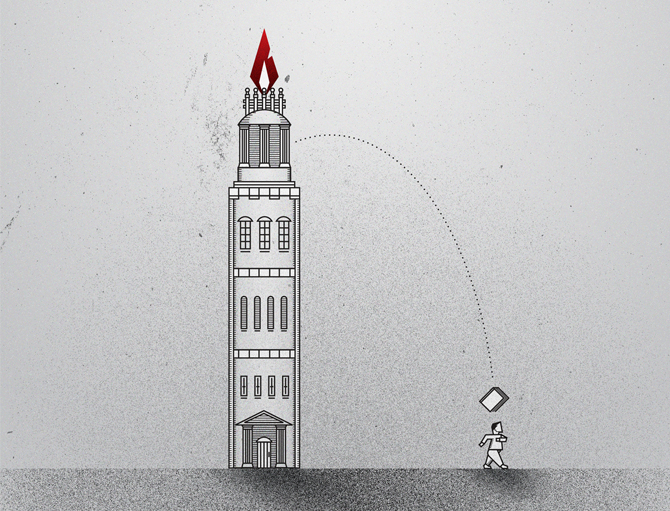
This blog is definitely out of the norm for my usual postings, but I hope you will bear with me. I feel so strongly about this professor’s “Message to My Freshman Students,” that I simply must respond, publicly and passionately, to his myopic vision. As high school graduation nears, I am afraid that too many well-meaning elders, whether they are parents, principals, or teachers, will forward his speech to their college-bound graduates, as an indication of what they can expect next fall. I surely hope they are mistaken, though I am a little discouraged by the 35k Facebook shares it’s garnered. But truly, it’s been my experience that Dr. Parsons’ perspective is that of a waning number of professors whose extended time in their Ivory Towers has led to a rather distorted view of their profession.
The first half of his speech is dedicated to encouraging his young students to take responsibility for their own learning. In order to pass, they have to show up for class, pay attention, listen carefully, do the reading, and complete the assignments, on time and well. I agree 100%. Students are responsible for their own learning and the freshman year usually presents some challenges in that arena. However, he also makes it very clear that he is not their “teacher,” someone whose “job is to make sure that you learn.” He is their professor and as such, he feels “It is no part of my job to make you learn.” Furthermore, “I have no obligation whatsoever to make sure that you pass or make any particular grade at all,” only “to lead you to the fountain of knowledge.”
This is where Dr. Parsons and I part ways.
He says nothing about a drinking vessel, a cupped hand, or the accessibility of the water in that fountain, but, Parsons magnanimously concedes, “Whether you drink deeply or only gargle is entirely up to you.” All of his wisdom can be yours, if you simply listen to him lecture you. Listen is the operative word. Listen carefully, critically and comprehensively, even if you have never been taught to listen in this way before. Parsons is a self-proclaimed, old-fashioned, “chalk and talk” man, more comfortable hearing the sound of his own voice than that of his ill-prepared and entitled students. Although that may sound harsh, I can sympathize with his point. Why not let the smartest person in the room do all of the talking?
Clearly, because it doesn’t work. It isn’t how his new students have learned for the first twelve years of their education. It isn’t how many students learn best, if at all. It is rarely the most effective way to deliver significant, but difficult information to anyone. Working at a university doesn’t give anyone a pass on keeping up with current pedagogy, or at least it shouldn’t. Parsons dismisses the constructive criticism and classroom coaching he’s been exposed to by calling it “Hogwash!”
Dr. Parsons is very clear about his loyalty to the ancient traditions of academia: “I have absorbed deeply the norms and values of an ancient academic culture and they are now a part of me.” Students, who are newcomers to this strange and exacting culture, need to get on board right away. Difficulty in assimilating is the fault of the immigrant, obviously, and few concessions should be made. He sees no need to update, or improve academia’s ancient methods, even thoughwe no longer live in the ancient world. The “fountain of knowledge” he so generously offers, once students have paid their ever higher and less affordable tuition, can be found for free in the library, on the internet, in the form of MOOC, in podcasts, (like the excellent, philosophical The Partially Examined Life), and cheaply through used books and textbooks on Amazon.
Parsons’ attitude illustrates why higher education is coming under such fire these days. More and more young people and their parents are questioning whether to take on a huge amount of debt to pay for a liberal arts degree. The bottom line is that for a university education to be of value (beyond the certificate), professors have to be a “value-added” proposition. They cannot merely sit like disembodied heads on thrones, unaccountable for the young heads that roll around them. I can think of no other position where an educator (or any employee for that matter) can state, “I am not held responsible for your failures. On the contrary, I get paid the same whether you get an ‘F’ or an ‘A.’”
Therein lies the problem.
In Dr. Parsons’ mind, professors are paid to know what they know, and write about it, not to ease the path of the young women and men who find themselves struggling in his Introduction to Philosophy course, a subject matter that Parsons’ himself calls, “an abstruse and difficult field… [full of] seemingly arcane and incomprehensible topics.” Fortunately, I believe most professors are far less cavalier with the joint contributions they are asked to make to both their field of study and the education of the next generation.
I understand Parsons’ frustration with unprepared and immature freshman. I’ve taught them off and on for the last twenty years, and encountered much of the behavior he points out, but I suspect it is his own ego and sense of entitlement that is driving the second half of his essay. Ironically, it is actually that kind of ego and entitlement that drove me away from an academic career many years ago. By the time I finished graduate school at the age of twenty-three, with a 100+ page master’s thesis under my belt, I knew the academic party line and I wanted no part of it. Though crude, I called it mental masturbation. Hopefully it’s changing, but it said in essence, live in your head. Specialize; know more and more about less and less, and publish for your peers, not the public. Parsons actually summed it up beautifully in another essay when he wrote, “The more you learn, the better it is. There is no such thing as too much knowledge.”
Dr. Parsons, I respectfully disagree.
Knowledge is valuable and necessary. I have pursued my natural curiosity all of my life and education is a priority in my home, but there is such a thing as too much knowledge. It becomes too much when we extol intellectual knowledge while denigrating other types of knowing, and when we privilege people who are “in the know,” over those who aren’t. It becomes too much when what we know becomes more important than who we are and how we treat others. Knowledge, as you know, is transcendent when it is used to elevate our common humanity, but can be dangerous when it becomes an end in and of itself.
So my speech for college freshman shares the same premise as Dr. Parsons’. My main advice to them would be to step up their learning game and take responsibility for their education, but the difference is that I believe I have a responsibility too. As the “educated” one, I have something of value, something a majority of my students want: knowledge, practical skills and application. I also have a job description and it is not simply to be a “lecturer,” although that is still, ironically, the archaic title used by some universities for their teaching professionals. My job requires me to inspire, engage and ultimately educate my students to the best of both of our abilities.
Despite my many objections to Dr. Parsons’ arrogant delivery, we do agree on a final point as well. The last line in his speech is this: “For your professor, a course is an opportunity for you to make your world richer and yourself stronger.” Amen to that, Professor, just don’t forget that the opportunity is yours as well.
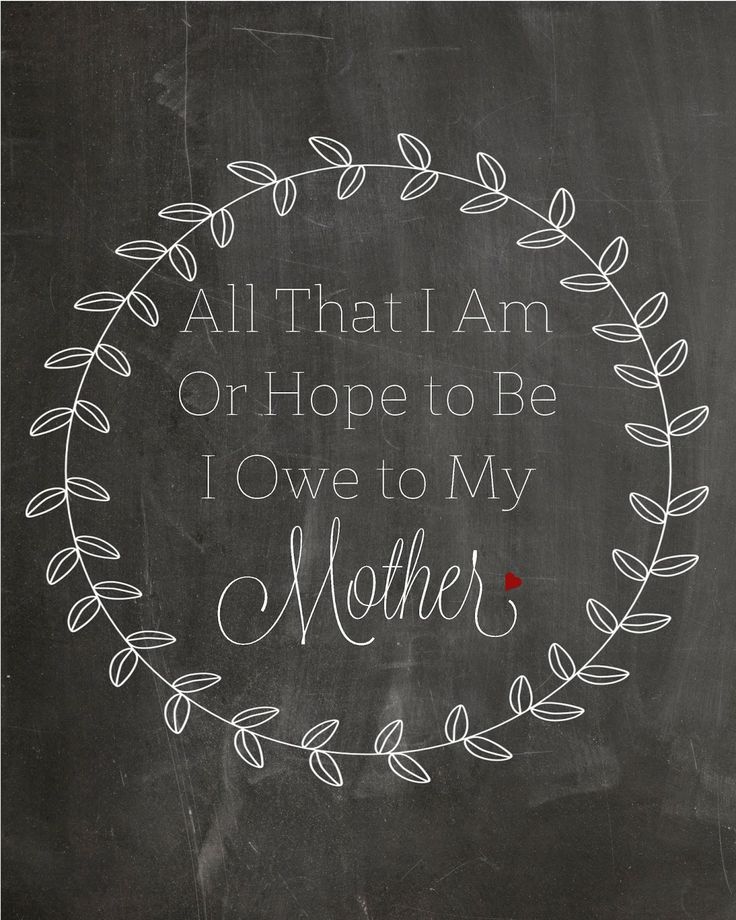
Mother’s day is approaching. It’s hard to forget it if you are on social media, as sentimental posts about the glory of moms flood the news feeds. Ostensibly, these images were created by men and women for their mothers, but obviously, they were created by moms for themselves. More than anything, they are a reflection of how we hope our kids feel about us. We share them as a tribute to our mamas, but really, we are just sending them as love letters to ourselves. A mother-child relationship is infinitely more complex. It’s a wonderfully complicated combination of love, devotion, and gratitude, with a healthy dose of resentment, and old wounds mixed in. If you don’t have mixed emotions about your mom, then you’ve done a lot of inner work, or you’re in total denial.
I know that traditional Mother’s Day offerings are flowers, brunches and pretty cards, but is there space for a little bit of honesty too? A bit of gentle teasing about all the things your mama really taught you?
The first things that come to mind about my mom can’t be romanticized, though they can be appreciated. She taught me how to burn chicken, go to church, play Scrabble and clip coupons. She taught me to love the beach, dancing and the Jackson Five. She taught me to prioritize travel, education and physical activity. She taught me self-discipline, thriftiness and that reading is a wonderful way to spend your time. I’ve used all those skills and they have served me well. If you want lessons, I will give you her number.
But there were some things my mother couldn’t teach me, because she didn’t know how to do them herself. My mother does not snuggle, except with babies. Her hugs are all shoulders and hipbones, even for those she loves deeply. Handholding is inefficient and slightly uncomfortable. Strong emotions are suspect, to be squashed if possible. Tears are dehydrating. Poetic language beyond her. If she feels something, you might know it, but probably not because she told you herself. Risk-taking is synonymous with irresponsibility, as is following your instincts and eating out too often.
Though they aren’t my favorite qualities, I understand where they came from. They are part of a family legacy, passed on to her from devout, depression-era parents, who raised eight children, making sure everyone got some, but no one got more than enough. That was true of candy bars, soda pop and probably even love.
While those are the easiest things to rattle off about my mom, they certainly aren’t the whole picture, so I would be remiss if I didn’t tell you a little more. It is Mother’s Day after all.
This is my Mother’s Day card for Sylvia.
For better and for worse, I am my mother’s daughter. I have learned and unlearned a thousand things from her, but these are the ones that I hope to carry on.
She is fiercely loyal to her family and friends. She shows up to every event on time and she does not gossip. Sylvia’s got your back. She is deeply faithful to her God and her husband. You do not make mass every Sunday and stay married for forty-eight years without saying to yourself, every day, “I’m in this for long haul.” She shows up where she’s needed. There is no task too big, or too small. From rocking a baby, to mopping the floor, to organizing charity events, Sylvia is on the job. Her home is open and so is the kitchen. Children, grandchildren, friends, friends of family, and friends of friends from foreign countries have all found a warm, clean bed and a full fridge in her house, just a stone’s throw from the Pacific Ocean. No checkout fee required, only the hope of a good conversation.
Finally, my mother loves her children deeply, though she rarely says so. Words are not Sylvia’s forte, but ironically, they are mine. I need things spelled out for me and so for years I mistook her acts of love and service as her children’s inevitable due. I thought that sacrificing a career and personal creativity, making meals, driving carpools, and planning family activities was just what moms did. I thought it was their job. I know better now.
It was a choice and it’s a choice she continues to make for all of us. Her job is even bigger now that we are all married with kids of our own. Instead of the four she started with, she now has four daughters, four sons, and twelve grandchildren. She makes sure everyone has some, and hopes that it’s enough. But I have to admit, she set our expectations pretty high and though she won’t say so, she probably feels stretched thin, meeting the “needs” of her ever-growing family.
So Mom, here is my Mother’s Day “gift” to you today. I’m sorry it’s in my native language of words, expressing perhaps too much honesty and emotion. Tomorrow, I will try to show my love for you in your native tongue of action. When I see you, I will give you a sideways hug, play a game of Scrabble, and clear a table. We can do some dancing, cuddle some babies and walk on the beach. Together, we can show our family how we love them.
P.S. If you think I’m being hard on my Mom, whom I love and respect dearly, I write this knowing full well my own children will have a laundry list a mile long of the things they need to unlearn from me and my “love.” It will probably include an overemphasis on deep breathing, inspirational quotes, and self-awareness, as well as an obsession with laundry day routines, repetitive menus and the reapplication of sunscreen.
It’s Holy Thursday, a day I’ve always loved. Holy Thursday was the day before “the bad day,” the day we captured and killed Jesus, the day before the whipping and crucifying and dying. When I was young, I used to get a migraine every Good Friday. Our mom would pull us in – from twelve to three in the afternoon, the hours Jesus hung on the cross – no TV, radio, or friends, just quiet playtime or reading, in solidarity with Jesus. It was like our own mini, pint-sized crucifixion. I used to dread that time. As the inevitable call to come home crept closer, I could feel the headache coming on. Later, there would be a church service, a dark, somber affair, with great drama, a reenactment of Jesus’ suffering and death, a time for compunction and weeping for all that we had done to put him there, followed by a simple meal at home. I don’t remember those evenings after church. I imagine they weren’t joyful, lighthearted, or boisterous, our usual routine. I imagine we slipped off to bed, each to our own quiet reverie, overwhelmed by all that we had seen and experienced.
I am grateful, however, that Good Friday was the only day of the year where the image of Jesus’ death, and our complicity in it, was emphasized. The substitutionary atonement theory existed, but not as a major theme in my life. We weren’t told daily that Jesus died to pay for our sins, that the difference between our guilt and God’s greatness could only be overcome by the blood of God’s own son. Though it was on full display once a year, it was quickly followed by beautiful, glorious Easter Sunday. Before dawn, we were up and dressed and eating candy. By 6 a.m. we were singing Alleluia en masse on the church lawn as the sun rose in the East, secure in the knowledge that death had lost its sting. The risen Jesus had gone to prepare a place for us in the dazzling glow of the glory of God.
For some readers, my Easter memories might sound similar to your own, while others might think my family sounded like religious nuts. Who exposes a child to a reenactment of an ancient death penalty and tells them (or allows them to be told) it’s at least partly their fault? It all seemed so normal at the time…
But what is normal now?
That’s the question I ask myself continually. What is the new normal? What is right for today? What have I taught my kids? What do they know, or believe? More importantly, what do their hearts tell them?
I have raised them in Church, with religious education and the Bible. They know most of the prayers, and have received the appropriate sacraments. I did these things as I felt called, honoring the tradition I was raised in, the very one that set me on my journey with God.
I pray their hearts tell them that Love is the answer, that connection and compassion are the keys to happiness, that authenticity is the only way to be a person of integrity in the world and to be authentic means that you need to know who you are. The only way to know who you are is to be still long enough to find out, to be willing to listen to the urgings of your heart, the still quiet voice inside you, and when you hear that voice, you have to be brave enough to act on it and be willing to fail, to know humbly that no one has all the answers, but that questioning the status quo, the way things are, is the only way to keep growing. If you aren’t growing, you are going backwards. And, oh yes, in case you forgot, Love is the answer.
And by Love I don’t mean that sickly, sweet, destructive emotion that is depicted in almost every TV show and movie produced in Hollywood. Love is the ability to keep your heart space open when everything in you wants to shut down and say, “No, not this.” Love is the ability to be brave when you want to run away, to do the right thing when the wrong thing or even no-thing is so much easier and safer. Love has the power to change the world, because it is the root of compassion, justice, equality, hope, humility, commitment, faithfulness, and tenderness.
Do my children know this? Probably not yet, not entirely, but I am sending them the message every chance I get, including tomorrow, Good Friday, “the bad day,” when I will ask them to attend a service with me. What I hope they see, when we commemorate the death of Jesus, is not a death that “had to happen” because we sinned. I reject that premise entirely. But rather the underlying truth of the universe it reveals:
Something has to die, so that something new can be reborn. It might be a dream, a relationship, a belief, a tradition, or even your very sense of self, but what follows can always be better than what came before if you Love. If you hold your heart space open, if you don’t shut down in bitterness, or fear, if you forgive reality for being what it is, Life will begin again. Love always wins.
Pierre Teilhard de Chardin called God, “Love energy.” Love is the Alpha and the Omega point, where we came from and where we are headed, but we will get there a lot faster if we participate in the process. By choosing Love ourselves, we can live an Easter miracle each and every day.
P.S. If you remember my Holy Thursday tradition, it continued this year. I am so grateful that at their ages and stages, my children still participate in this ritual of tenderness and blessing. You can read more about our annual foot-washing here and here.
Last week as I began to prepare for Ash Wednesday and the beginning of Lent (which starts tomorrow by the way), I decided to review my previous posts on the topic, as well as my journals.
2011, 2012, 2013, 2014 … It wasn’t a pretty sight.
I discovered an unfortunate pattern of pain, struggle and personal humiliation. I set lofty goals, make myself miserable in the process and ultimately end up needing to apologize to Tim on Good Friday for taking him down with me.
This year, I’m doing something radically different.
I’m not changing a thing: I’m simply going to practice my practice.
I’m going to meditate and walk, read and write.
I’m going to hug my family members whenever they get within arm’s length.
I’m going to teach my students and smile at friends and strangers alike.
I’m going to look for Love and share it whenever and however I can.
Whatever I am already doing that opens me up to God’s Loving presence in the world, I’m going to keep doing. Whatever shuts me down, I’m going to forgive and move on.
When I told Tim my plans for this Lent, he let out a huge sigh of relief and possibly even sent up a silent prayer of gratitude to a God he isn’t even sure he believes in.
If I was looking for a sign I was on the right track, that would have done it, but the peace I feel in my own heart is confirmation enough.
So whether you celebrate Lent or not, maybe six weeks in to the New Year is a good time to check in with yourself. How’s it going? How do you feel? What in your life reminds you that you are enough, you do enough, you have enough? I’m not saying you should add anything to your daily routine, but I hope there is at least one moment every day where you think, “This is exactly where I’m supposed to be.”
That, my friends, is a practice worth practicing. That, my friends, is a resurrection.
I woke early this morning – like 4 a.m. early – and decided to tackle one of my theology chapters for the Living School. I find it much easier to get through this type of work with a well-rested mind. What looks like gibberish at 10 p.m. somehow becomes intelligible after seven hours of sleep. This particular chapter was from a book called Christophany by Raimon Pannikar. Here is a sample:
Here we see clearly delineated a twofold dimension of Christianity that a dualistic vision of reality has difficulty keeping in harmony, despite the fact that nonduality is the quintessence of Christ’s mystery – totus Deus et totus homo (“The whole God and the whole man”) according to the classical expression. An inevitable consequence of this “panhistorical” vision of Christianity would be that the eucharist cannot be Christ’s real and true presence, but only an anamnesis (“memory”) of a past fact. In other words, without a mystical vision, the Eucharistic reality disappears.
After reading it the first time, there was nothing “clearly delineated.” No “inevitable consequence” was obvious to me. However, after several passes a modicum of understanding emerged. If his meaning is crystal clear to you, leave a comment below and we will discuss.
However, if that paragraph of theology leaves you cold, read on.
I will confess, there is some part of me that loves academic work. I love the puzzle, the working things out, the “Aha” moment when I finally grasp the author’s point. It’s even better when I have not just comprehension, but a strong opinion on their argument. That is a true victory!
But as I find myself being intellectually and egoically seduced by the power of knowledge, I also know, in the pit of my stomach, that it’s “nothing but straw,” as Thomas Aquinas infamously said in the final days of his life. Ultimately, on a cold day, in the concrete reality of our lives, most of what has been written about God would be most useful as fuel for a fire to keep us warm. Theology simply falls short of experiential knowledge. Simply put, our study of the Divine has far less of an impact on us than our experience of it.
The only theology we truly need to know is that God is Love with a capital L. Jesus gave us only two commandments: Love the Lord your God with all your heart and soul and mind and strength and love your neighbor as yourself. That’s it. Like Hillel, he thought the rest would take care of itself. St. Augustine said simply, “Love God and do as you please.” But even this simple theology is worthless if we are not Loved in real life, in real ways, by real people, intentionally, compassionately, fiercely and unconditionally. Without the lived experience of deeply committed Love, by parent, spouse, friend or community, even this theology can be twisted and misunderstood.
I know academic studies of theology, philosophy and the like are critical disciplines. They elevate and animate conversations at the highest levels and shape our educational system and our vision of the world. They record the evolution of our collective consciousness. Without Plato, Socrates, Augustine, Bonaventure, Aquinas, without Descartes and Voltaire, Locke and Hobbes, and countless others, we would not be where we are today. But these subjects are not for everyone and I am grateful for the one percent who study them responsibly and have an opportunity to influence our world.
I know what they’ve done is good, but I read a story about Tamika Brown today, who is the embodiment of a lived theology of Love and
I am convinced that if all the theology in the world from every culture and religion, Christianity, Judaism, Islam, Buddhism, Hinduism and every other, ceased to exist tomorrow and instead we all Loved like this,the world would be a better place.
Two years ago, Tamika’s son, Richie Knight, was stabbed to death when he was 19 years old. His killer was Ian Lorne Ellis, a 17-year-old young man from the neighborhood, who Richie had been in confrontations with in the months before the murder. Ellis pled guilty to voluntary manslaughter and will serve twenty-one years in prison. This is what Tamika had to say to him in the courtroom on the day of his sentencing.
“Only God knows why I’m not angry, or why I don’t hate you. Would it shock you to hear that I love you? I thought to myself one day a while back, ‘Don’t lock him up. Sentence him to my home. Let him be my son that he took away from me.’”
Can you imagine if we all sought justice this way? If loss opened us up and allowed us to give birth to something new and miraculous, instead of hardening our hearts, seeking retribution?
Tamika sang to her son’s killer about the source of her Love, starting with the song, “He Cares,” but changing a few words on the spot:
“So you think that you can’t make it through,/ Just remember that my God cares for you…/Don’t give up, don’t give in/ Today make Jesus Christ your number one friend.”
In suffering, Tamika knew Love, but instead of sharing it only with her friends and family, she extended it to the other, her enemy. No one can say this is soft, or easy, or wishy-washy theology. This is Love from its the deepest source, in any culture and by any name. She changed the equation. We are accused and we get defensive; we are Loved and we can be transformed.
Theology is all well and good, but it should never trump the embodied reality of Love. Think of France and Nigeria. Think of Israel and Palestine, ISIS and Iraq. Think of Leelah Alcorn. All these tragedies were based on mistaken theologies, ones that said there was a something greater than Love. We have to do better.
I may study theology, but I choose Love.
If you want to read the local news story, click here.
Ready for our close up, Team Kirks comes together for the filming of our 2014 Christmas video.
Dear Friends –
Merry Christmas! Happy Hanukkah! Cheers to the Winter Solstice!
For the last five years, our family has chosen to send out a Christmas video in lieu of a traditional card. It always seems like a good idea until I start receiving beautiful pictures and messages from across the country. The cards communicate so much joy and holiday perfection that it makes me want to disseminate pretty pictures of my family too, instead of posting a bizarre video on Youtube. As long as the Internet exists, so too does our foray into absurdity. However, as C.S. Lewis once said, “We are embarked” and for the other four members of my family, there is no going back. Every year, it takes patience, creativity, humor and teamwork. This year, it also took a little more trust, at least on my part.
As I age, I tend to feel ever more foolish during the filming process and critical of how I look in the final product. This year, it’s more ridiculous than ever. But as Tim wrapped up the editing process, and I began to fret about what people would think, I read a reflection from Richard Rohr, O.F.M., one of our favorite spiritual writers and advisors. It was about being a “holy fool.”
According to legend, every once in a while, St. Francis would do something really ridiculous to embarrass himself in front of the people of Assisi. He paraded down the street in nothing but his underwear. He played seesaw on the town fountain all day long. He spoke to animals loudly and without shame. He never wanted people to see him as “more” than he really was.
Obviously, I’m no saint, but I can learn from the quest of the “holy fool.”
When you are a “holy fool” you’ve stopped trying to look like something more than you really are. That’s when you know, as you eventually have to know, that we are all naked underneath our clothes, and we don’t need to pretend to be better than we are. I am who I am, who I am, who I am; and that creation, for some unbelievable reason, is who God loves, precisely in its uniqueness. My true identity and my deepest freedom comes from God’s infinite love for me, not from what people think of me or say about me….
If you watch this year’s Christmas video, or scroll through the past years, the characters in the videos aren’t the “real me,” but they aren’t any less me than the woman I am sweating at the gym, studying theology, or cooking dinner. The videos are simply the most embarrassing versions currently on film.
The real me is who I am as I am held by God in Love. When I remember that, it doesn’t matter what kind of “fool” people take me to be and I have the courage to hit the Send button to my Christmas card list (and ultimately to all of you).
If I were going to say anything about my family, beyond what you can see in the video, it is this: I am proud they have the confidence to be “fools” for at least one more year. From Tim to Molly, they know who they are and they know they are loved. What more could a mom ask for?
I hope that over the next two weeks, there are more times of joy and peace than sadness and stress and that somehow, at some time, you get to play the “holy fool” and experience the freedom it brings.











 ALISON KIRKPATRICK