Christmas is only a few short weeks away. Nineteen days to prepare, shop, bake and decorate. I was blown away at how quickly everyone got their Christmas stuff out and up and displayed on Instagram and Facebook last weekend. The turkey carcass from Thanksgiving dinner was still warm by the time the lights were on the tree. I’m not criticizing! I admire an ability to work on a full stomach. It’s just not the way I work.
I tend to put the Christmas cheer on a slow burn, much to Molly’s dismay. There have been years where the tree isn’t even bought until the 20th. Presents are kept in closets and cubbyholes until I get around to wrapping them on the 23rd. Some of this delay is simply practical. December is the busiest month of the year for Tim at the surf shop. My semester ends mid-December and I am inundated with finals and papers to grade. The kids are typically in school until the third week. Throw in a couple soccer tournaments, Christmas parties and holiday events and who has the time to decorate?
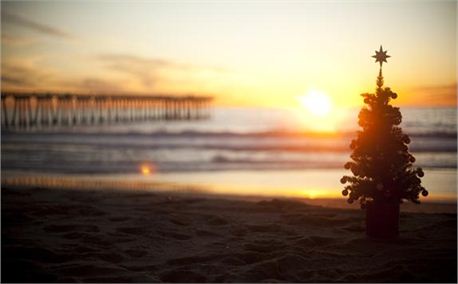
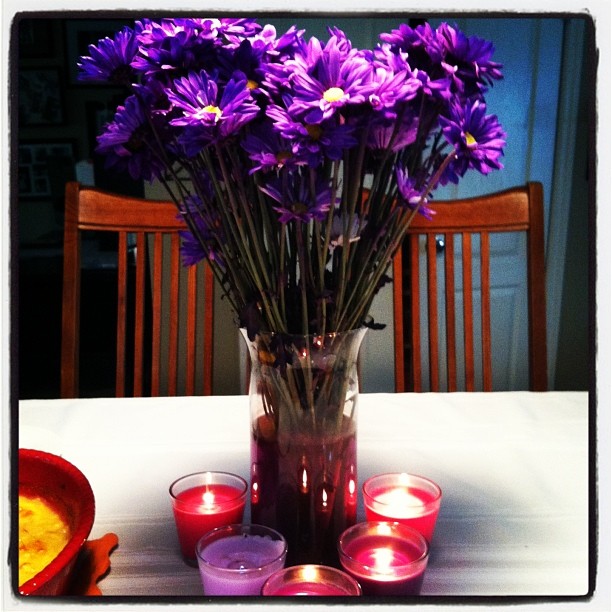
This year, most of those factors still exist, but more so than ever, I find myself holding back from the Christmas “spirit.” Instead, I’m immersing myself in Advent and the mystery of the Incarnation. If I could, I would wrap my house in deep purple. It would stay dark and candle-lit and smell like pine needles. I would transport us to the top of a snowy mountain where we could sit quietly and reflect on what it means to give birth to Christ in and through our very selves. Of course, Tim and the kids would hightail it out of there the first chance they got, hopping on toboggans to the nearest gingerbread village they could find.
My December dream house
Trying to keep them away from the joy of December, Christmas carols and cookies is more Grinch than Mother Mary, so decorating, baking and singing will commence tomorrow morning. I hate to hold back anybody’s good time, but in my own quiet time, in my reading, writing, and meditating, I am going to hold on to the mystery of the Incarnation that is pressing so deeply on my heart these days.
Two thousand years ago, Jesus was born from and through Mary, but the Christ is born in each of us, over and over again, throughout time and across every continent, in every gender and age, regardless of purity, sanctity or professed faith tradition. All is takes is a willing heart.
Every act of Love is an act of incarnation.
God is Love and Christ is the physical manifestation of God, so whenever we Love, truly, actively and deeply, we are bringing Christ to the world. God is incarnated through us.
Mary said Yes to giving birth to Jesus, because she Loved God. She trusted that God’s Love would sustain her through the shame and pain and instability the Incarnation would cause her. The result, she was assured, would be something wondrous, greater than anything the world had ever known. Love like this, in flesh and blood, would change everything.
Let’s be brave like Mary this time of year. Instead of going nonstop, let’s wait. Let’s sit quietly in our homes sometimes, maybe for a few minutes in the evening by the light of our tree, maybe with a cup of tea on our couch in the morning. Let’s be still and listen for where God is asking us to bring Love into the world through our own flesh and blood.
With God, who knows what that request will look like?
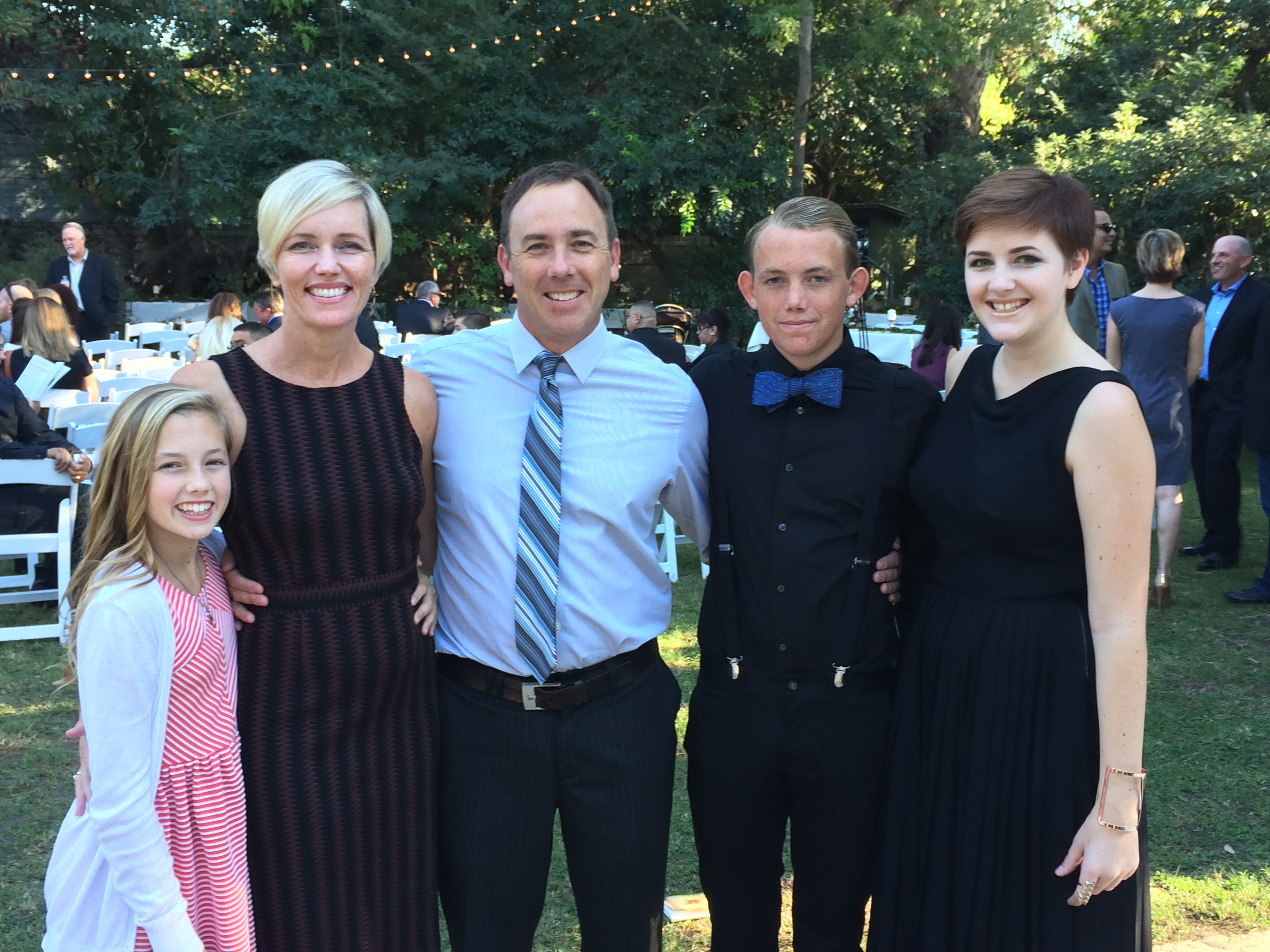
On Saturday, my family had the pleasure of attending a wedding; I had the privilege of speaking there at the request of these two lovely people.
Todd and Amanda, courtesy of ChristaSuppe Photography
This is Todd and Amanda. Their love story is unusual. Todd’s a little older than Amanda and their romance began under some rather unusual circumstances, but over the last 18 months, I have seen their love grow.
None of us knows where romance will take us when we first start out, but I think these two have navigated enough detours to find themselves on the right path. The tricky part, for them and for all of us, is figuring out how to stay there. I hope I gave them some good advice.
Here’s what I shared during the ceremony:
“I am known to Todd and Amanda as someone who loves Love. My theme song: “All You Need is Love.” My blog: #Signs of Love. I find Love in the form of hearts everywhere I go – in dirt, in rocks and leaves, water, shadows and food and post them on Instagram. You might say Love is my thing, so they probably thought I’d have a thing or two to say about.
I’m going to start with my favorite poem about Love by e.e. cummings.
It’s called “i carry your heart with me.”
i carry your heart with me (i carry it in
my heart) i am never without it (anywhere
i go you go ,my dear; and whatever is done
by only me is your doing, my darling)
i fear
no fate(for you are my fate, my sweet)i want
no world(for beautiful you are my world, my true)
and it’s you are whatever a moon has always meant
and whatever a sun will always sing is you
here is the deepest secret nobody knows
(here is the root of the root and the bud of the bud
and the sky of the sky of a tree called life; which grows
higher than soul can hope or mind can hide)
and this is the wonder that’s keeping the stars apart
i carry your heart (i carry it in my heart)
I had a copy of that poem hand-calligraphied for my husband Tim for our 5th anniversary. The first line is inscribed on the inside of his ring. It has always spoken the truth of how I feel about him. When I was younger, I was afraid it made me sounds a little clingy, but after 20 years, I don’t worry about that. I know that Love goes and grows even deeper than that, even deeper than I thought possible. For me, this poem is about love on a cellular level.
Love doesn’t just happen up here, in our heads, in our decision to care and commit to someone. It doesn’t happen just here, in our hearts, in the way we feel about them. Love happens here – from my head to my toes. Love happens with every breath that we take.
Quantum physics has discovered that something like Love actually exists on a molecular level.
An atom’s attraction to another atom – it’s not just random, like I always thought. It’s actually deeply personal in some way, as strange as that sounds. There are billions of atoms bumping into each other all the time, but they don’t get together. They wait until the find the right one and when atoms choose each other, they willingly give up some part of themselves, so that they can come together, and be balanced. What happens between those two particles is selfless, creative and life-giving. Together they create something new, something more complicated, but generative too. They are no longer two, but one and that brings life to the world. It isn’t just hydrogen, it isn’t just oxygen any more; it’s water.
One of my favorite writers and mystics, Teillard de Chardin, who was a scientist as well, claimed “the physical structure of our universe is Love” and I couldn’t agree more.
In 1 John, the writer states: “God is Love,” which we’ve turned into a totally overused phrase, I know. But when we say “God is Love,” I think that’s actually what we’re talking about. God is Love and Love is actually the physical structure of the universe. Love is the energy that sustains everything, through continual selfless, creative and life-giving actions. And so when we commit to Love, like Todd and Amanda are today, they are committing to a practice of selflessness and creativity, so they can bring new life to the world – not just in the form of grandbabies for Bruce and Clara and Ramona – but new life to the universe itself, in ways they can’t even fathom, but that I am sure God is counting on them to deliver. God’s counting on all of us to deliver.
Like the atoms we are made of, Todd and Amanda, you’ve made a choice for each other. Out of seven billion men and women in the world who bump up against each other every day, you’ve said, ‘That’s the one for me.” You’ve willingly given up many things to be here today: treasures from your past and perhaps even some dreams for your future. And everything about this wedding, from the invitations to the table settings to the ceremony, speaks of your creativity, which I now hope you will pour into your marriage and relationship.
When each of us is born, God whispers in our ear, “i carry your heart with me (i carry it in my heart).” There is no dividing us from God’s heart and today, you make that same promise to each other. Carry each other’s hearts lovingly, gently, patiently, honestly, compassionately and faithfully and I promise that the life you gain will “(grow higher than soul can hope or mind can hide).” It will be the very wonder that’s keeping the stars apart.
Fear no fate and want no world, other than the one you begin today in Love.”
I loved sharing those thoughts on Love, though I’m not sure they came across quite like I wanted them to. They came from my heart, but might have sounded a little academic. The mic kept going out, so I felt like a techno remix of myself, dropping syllables and beats as I went along. I would look out at the crowd of 250 blank faces and get scared, but then look back into the smiling eyes of the bride and groom, just a foot away from me, and relax. They heard me just fine.
It was also hard to choose what to include and what to leave out. There are a hundred poems on Love I could have shared from Rilke, or Shakespeare to Bono or Leonard Cohen. I wanted to talk about quantum entanglement, the importance of commitment, the risk/reward ratio of investing your whole life in someone else. Love involves all those things and more, but I had to make a choice. They asked for five minutes, not fifty, and so I spoke the truest words about Love I know.
Here are a few more things I know.
In our deepest being, Love is what we are made for.
If we are not Loving, we are not truly living.
Love asks us to die to ourselves, so something new can be born.
We have to be willing to let go of our dreams of perfection in order to keep Loving. If we refuse to grow and change, or keep others from doing so, we create a legacy of broken promises and broken hearts (especially our own).
Love is mutual.
It never requires only one to give and the other to take. If that is how your relationship works, it might be romance, or co-dependency, but it isn’t Love.
God is Love.
If you know Love, you know God. And if you claim to know God, but do not Love selflessly, creatively and in ways that bring new life to the world, you have a case of mistaken identity. You know a god, who is not God.
Love isn’t love.
We throw the word around carelessly, “loving” this and that, based on our expectations and emotions, but what the world calls love is not Love at all. It’s a cheap imitation based on infatuation, without integrity. It can become Love, but it doesn’t start out that way. Love with intention, which “grows higher than soul can hope or mind can hide” will change the shape of our lives and if we lean into it, the very course of the world.
I write these words from my experiences of trying and failing to Love with my whole heart, over and over again. I have been committed to the same man for over 23 years, more than half my life. I have given birth to four beautiful children and have had the privilege of raising three of them. I have two parents, three siblings, eleven in-laws and dozens of relatives and friends. I have met thousands of people along the way. I have tried in some way to Love them all. I have failed as often as I have succeeded, but I hope I’m getting better with age and practice.
I have studied Love, watched Love, written about it and found it written in the ground beneath my feet. But it still surprises me. It can take my breath away, sometimes with its beauty and sometimes with the impossibility of what it is asking me to do. You want me to Love that? I find myself thinking when faced with an extremely difficult person, situation, or institution. Yes, is always the answer.
And so I keep trying, because I have been Loved by Love itself.
Tim and I woke up this morning and we did not put on our Sunday best, not even in our hearts. After getting annoyed with each other for the 10th time in an hour, we knew we had to get away from Ground Zero. We had to go home to the beach.
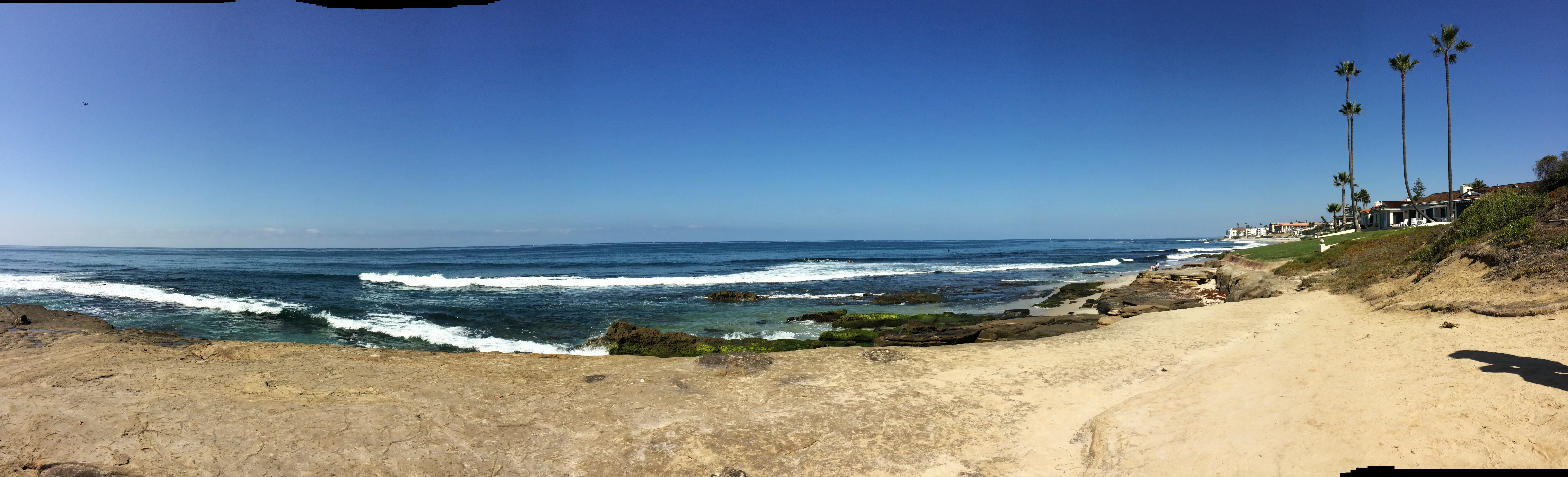
We went to Wind and Sea in south La Jolla and got wet. We climbed rocks, breathed in the salty air, listened to the waves and watched the water rolling on shore, over and over again. Our hands brushed and instead of pulling away, our fingers intertwined. Over the minutes, the ticking time bombs lodged in our chests became our beating hearts once again.
I don’t know exactly what it is about the ocean that brings me home, but there is no place on earth where I find such peace, where I find myself inhabiting my own body, my heart and soul. I know the ocean doesn’t work magic on everyone, but everyone has a place that works magic on them.
It could be the beauty of a canyon, the desert, or a lake in the mountains. It might be standing in freshly fallen snow, listening to the rain, or a river go by, or even the smell of the earth and the feel of it in your hands. Everyone finds their own way “home.”
We forget to go where we feel most alive, because we confuse being “alive” with “life.” Life is what we do every day; it’s the simple act of breathing in and out and all the complications that come with it. It’s work and chores, relationships and realities. Being alive is something else entirely. When we are truly alive, we are fully present to ourselves, body and soul. When we are truly living, we aren’t just keeping busy with the smallest details to avoid asking the larger questions.
For my birthday last month, my friend Leighann gave me a journal with one of my favorite quotes on the cover.
“I must be a mermaid. I have no fear of depths and a great fear of shallow living.” Anais Nin
Life will keep us on the surface. Alive, we want to go deeper. I wish it weren’t quite so easy to simply live our lives.
I’ve spent a lot of time at the beach lately, swimming, paddling, thinking, reading and writing. My car is a mess of sand, seaweed and salt-water stains. My life tells me to clean it up. My heart tells me to leave it be, so it can remind me to get back to living.
This week, I hope something does the same for you – an over-reaction, an under-achievement, a dirty car. I hope you remember where you feel most alive and get there if you can. Go early in the morning, or late at night, in the sun, or rain, or in the bright, hot light of day. Breathe in the air that gives life to who you are. Close your eyes and let the smell of your home surround you. Be in that place. Be in your body. You might laugh or cry; going home will do that to you, especially if it’s been a while.
I want to leave you with a poem by Jane Hooper.
“Please Come Home”
Please come home.
Please come home.
Find the place where your feet know where to walk
And follow your own trail home.
Please come home.
Please come home into your own body,
Your own vessel, your own earth.
Please come home into each and every cell,
And fully into the space that surrounds you…
Please come home.
Please come home to trusting yourself,
And your instincts and your ways and your knowings,
And even the particular quirks of your personality.
Please come home.
Please come home and once you are firmly there,
Please stay home awhile and come to a deep rest within.
Please treasure your home. Please love and embrace your home.
Please get a deep, deep sense of what it’s like to be truly home.
Please come home.Please come home.
And when you’re really, really ready,
And there’s a detectable urge on the outbreath, then please come out.
Please come home and please come forward.
Please express who you are to us, and please trust us
To see you and hear you and touch you
And recognize you as best we can.
Please come home.Please come home and let us know
All the nooks and crannies that are calling to be seen.
Please come home, and let us know the More
That is there that wants to come out.
Please come home.Please come home
For you belong here now.You belong among us.
Please inhabit your place fully so we can learn from you,
From your voice and your ways and your presence.
Please come home.Please come home.
And when you feel yourself home, please welcome us too,
For we too forget that we belong and are welcome,
And that we are called to express fully who we are.
Please come home.Please come home.
You and you and you and me.
Please come home.Please come home.
Thank you, Earth, for welcoming us.
And thank you touch of eyes and ears and skin,
Touch of love for welcoming us.
May we wake up and remember who we truly are.
Please come home.
Please come home.
Please come home.
I hope you’ll share your homecoming with me here, or on Facebook. They are my favorite stories. Where will you find home this week and how does it feel to be alive?
I believe in happy endings, but before you dismiss me as a romantic, let me clarify.
A happy ending isn’t the same as “happily ever after.”
A happy ending isn’t limited to times when you get exactly what you want.
A happy ending doesn’t mean there’s no darkness on the horizon and it definitely doesn’t mean nothing bad is ever going to happen again.
A happy ending is simply this: in the end, there is some possibility for redemption, a glimmer of hope that all is not lost.
I don’t know when we started to lose our capacity for hope as a nation, but it seems to me we’re on our way and in some Western societies, they’ve arrived.
The Washington Post ran a commentary this week by Michael Gerson, which described the practice of euthanasia in Belgium, a (seemingly) civilized society. When afflicted with a serious, or terminal illness, it is a basic right in that country to have assistance in carrying out your own death. The Belgian courts recently extended that right to prisoners with mental illnesses, saying in essence, if you don’t want to be alive, who are we to stop you? In fact, it’s our moral and legal obligation to help you.
My heart dropped as the writer considered the implications of the ruling. At what point is mental illness considered terminal? At what age do we give up hope for successful treatment and recovery? At what point do we start believing that the “right” to commit suicide when facing cancer, dementia, Parkinson’s, or the like, is actually a duty, or obligation? At what point do ailing individuals feel like they must act on the perception they are taking up too much space and time in their homes, or society? At what point past our prime do we become undeserving of our space?
In the last year alone, 1,800 Belgians exercised their right to die, up 25% from the previous year. Are these numbers a sign of a need that was previously unfilled, or of a society who has lost their cultural belief in happy endings?
When everyone surrounding you believes that who and what you are in this moment is all there is, then you are in trouble (and so are we). The one who is suffering cannot be relied on to see the route to healing for themselves. That’s asking too much of them, to carry the burden of their pain and the weight of possibility as well. It’s our obligation to hold that hope for them. We may not feel like happy endings are real, but we’d better believe it anyway, because it’s the only hope for our future.
A happy ending says that when everything is lost, something can be gained. When we are broken, something new will be made. When all is dark, it’s because we can’t see the light, not because the light doesn’t exist.
While we are well, we need to repeat these truths to ourselves over and over again, so that we can remember them when the bad days come.
Every day, in public schools across America, kids recite the Pledge of Allegiance, claiming that our nation is “indivisible, with liberty and justice for all.” It’s a good thing too, because the evidence to the contrary is everywhere. It doesn’t always feel like our country is on the right track, but our common belief in those foundational values allows us to press on and reach for our higher selves, instead of giving up on the system. We need to bring that same level of commitment to the way we value life itself, not just the structures that govern it.
As individuals we can’t believe in happy endings all the time. That’s why we have to believe in them as a society, as families, as parents and spouses and siblings and friends. We have to talk about them, share them, celebrate them. We have to saturate our culture with the knowledge that just because we can’t see the way out, doesn’t mean it isn’t there.
I find it discouraging that so much of our cultural conditioning leads us to believe that ‘happy endings’ are for fools and fairytales. Happy endings are for fighters too. Like Winston Churchill, I believe that we can “never, never, never, never give in.” But Belgium has. In the name of choice, they’ve lost sight of our collective human responsibility to struggle together to make meaning from our lives and our deaths.
I am not unsympathetic to those in mental and physical pain. I would never make a blanket judgment about someone’s obligation to live through unspeakable suffering, or the choices they make in those moments, hopefully surrounded by loved ones. But I want to make my stand on the side of hopefulness. James Finley, one of my teachers, commented recently, “Few people in hospice recover, but many people in hospice are healed.” Healing, of any kind, is a happy ending, for those who are leaving and those left behind.
Ultimately, a happy ending isn’t primarily about how we face the end of our lives, though that’s what got me thinking about the subject. A happy ending is about how we face the disappointments we are handed each and every day: the too-small bank account, the unflattering gossip, the college rejection letter, the nasty fight with our spouse, the team our kids didn’t make and the friends who don’t want to play. Do we believe something good can come from this bad?
No matter how many movies, books and songs try to convince me otherwise, I believe in the power of happy endings. When I look the “bright side,” it’s not out of naive optimism, or willful ignorance. It’s an intentional choice. How else will I meet those final challenges without a daily practice in the hope I claim?
Where is my happy ending? Right here, wherever I am.
Since it’s been six weeks since I last posted a blog, this confession might come as no surprise to you.
Sometimes, I forget I’m a writer.
Summer is not an ideal time for writing. It’s a time for being and doing. Whether I like it or not, it’s time to be with my children. Without school, they are simply around more. It’s also a time for doing, since they need more rides, more meals, more entertainment, more money, more looking after. So between all my doing and being, there has not been a lot of time for writing.
But summer’s end is quickly approaching and my thoughts have turned to writing again.
A few months ago, I wrote a piece called, “Standing on the Threshold,” about how a far off dream of going to seminary was going to become a reality this fall.
I blinked; summer passed. It’s fall.
I leave for school on Sunday and I can hardly believe it’s here. Though I will only be gone for a week, it’s the start of something new. It felt like an important time to write again, to mark where I am, where I plan to go and what I hope to do along the way.
I heard a sermon yesterday at Keara’s back-to-school mass at the Academy of Our Lady of Peace. The gospel was the story of how Jesus cured the blind man. The priest himself looked like he could relate. He wore thick glasses and without them, I’m not sure he could see at all. He shared that growing up, he was called “Four Eyes” by many of his classmates. They meant it as an insult, but today he takes it as a compliment.
The priest told the story of watching a young, blind boy go to communion. He used a cane to check what was in front of him, but his mother walked behind him with her hands on his shoulders to guide and protect him. The priest admitted that if someone asked him to describe his mother, he would say that she is 5’7,” with blue eyes and brown hair. If someone asked that little boy, he would talk about his mother’s demeanor, her voice, the feel of her hands, her care. The boy, out of necessity, moved beyond his first vision.
Too often, the priest mused, we see only with the two eyes in our head. We take in what we see; we judge it, process it and put everything in its proper place. But how much are we really seeing if we only use our two eyes? We stay on the surface of things, like physical appearance and condition, but miss the essence. We stop short, not plumbing the depths and complexities of people and situations. We see quickly and partially, but unfortunately, we assume we are seeing all.
If left to our own devices, we think the first set of eyes are all we have, when in fact “Four Eyes” applies to us all.
I am a pro at using my first set of eyes. I’ve always been adept at learning anything and everything (except complex math) and spitting it back at the appropriate time – when needed, or when needed to impress someone. And though going to seminary has always been a dream of mine, one of the reasons I’ve held back for so long is because the ones I’ve encountered seemed to focus on the first set of eyes.
What do you know? What can you learn? What can you prove? What can you write, explain, or deduce from what you’ve seen?
I jumped through all those hoops in graduate school. I cared passionately about the subject matter, but it was all words, and head knowledge. It was learning for it’s own sake, instead of the greater good. I couldn’t imagine learning about God, Love, forgiveness, compassion and mercy in that way, with my first set of eyes. They simply don’t see enough.
I want to develop my second set of eyes, the eyes of the heart, and that is what The Living School offers.
At one point in his sermon, the priest held up a mirror to one of the girls in the assembly and asked her what she saw. “Myself,” she said simply. He turned the mirror to his own face and said, “That’s funny. When I look in the mirror, I see beauty.” The girls giggled, but he was serious. He countered that when they look in the mirror with their first set of eyes, they judge the surface that is reflected back at them, and usually they will find a flaw (or many), but if they can look at themselves with their second set of eyes, they will see beauty and goodness and infinite possibility.
The eyes of the heart are the eyes of God.
The eyes of the heart see past the surface, beyond the masks, the posturing, the pain and scars of this world. They know that everything belongs. They may not understand how, or why, or when all things will be reconciled, but they know it is true.
There are many ways to nurture our second set of eyes, but first we must acknowledge they exist. Many of us deny it, clinging to Rousseau’s folly that “I think, therefore I am,” or else living a kind of practical (and pragmatic) atheism, even if we claim a religious tradition. We follow the letter of the law we see, rather than the spirit of the law, which takes longer to discern and requires a comfort with ambiguity.
But when we acknowledge our second set of eyes, we also need to start using them, all the time. We can’t leave them at home on the shelf, or tucked away in our coat pocket for when we are feeling particularly brave. We can’t just pull them out for an hour on Sundays. We have to wear them whenever the need arises, whenever our ego hastens to judge, categorize, or dismiss something, or someone that makes us uncomfortable.
When I was a little girl and got my first pair of glasses, I remember the doctor telling my mom that I should only wear them for about an hour. I could wear them a little longer each day, but if I tried to wear them for too long, too soon, I might get a headache, feel nauseous, and even disoriented.
I have to admit that seeing through the eyes of the heart can make me feel that way too. It’s like the things I knew to be true – about what was good and bad, helpful and hurtful, successful, or a failure – aren’t just that anymore. Most events bring both good and bad; they hurt me and help me; they break my heart, but when it heals, it leaves all sorts of little cracks that let the light in. When I keep the eyes of my heart open, I am more able to see the beauty in everything.
Over the next two years, I am going to try to see all that I can with my double vision.
Thanks for reading and joining me on my journey.
“The intuitive mind is a sacred gift. The rational mind is a faithful servant. We have created a society that honors the servant, and has almost totally forgotten the gift.” –Albert Einstein, who I’m pretty sure had four eyes
On Sunday, my family returned from our week at La Casa de Maria Family Retreat. I’ve written about Family Retreat before, what it means to us and what it could mean to all of you. You can catch up here.
The theme for Family Camp 2014 was Storytellers. We covered a lot of ground in five days. We began with the premise that our stories are all a part of God’s story and worked from there. None of us are excluded, no journey or character is too small, or insignificant. We talked about the stories we love, the ones we tell ourselves to get by and the stories we hide behind. We talked about Love stories we embrace and the ones we’d rather forget. We gathered each day with the premise that listening itself is an act of love. (Thanks Storycorp!)
Though I spoke throughout the week on a variety of topics, my favorite talk, the one closest to my heart, came on Thursday, when we open up the floor to any storyteller who wants to share. In those moments, before I handed off the mic, I was able to explore a theme that has been the focus of much of my journey over the last several months and years: the relationship between Fear and Freedom.
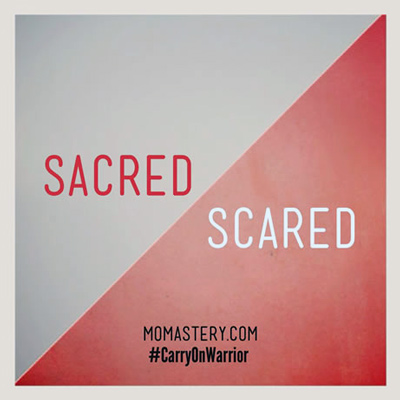
The theme of the day was inspired by Momastery.com. This is their image.
The words that follow are the ones I spoke last Thursday at Family Retreat.
“Until Glennon Melton put those two words together, I had no idea they were related, but after I saw it, I wondered how I could have missed it.
Sometimes, the stories that are the most sacred to us, the most holy, the most personal, are the ones we are the most scared to tell. What if someone doesn’t understand, or respect our story? What if they judge us, or treat us differently after we share it? What if our story includes something we did wrong, or that we don’t have a resolution for yet? It can be really scary to tell our story, because we don’t have the answer to those questions.
Trust me when I tell you that it was really scary for many members of our team this week to get up and share their stories. We’ve done some things right, but we’ve also done plenty of things wrong and there were no guarantees on how you would experience it, or react to us after we shared it.
But we chose to be story tellers, because of those two words up there. The parts of our stories that we are the most scared of can only become sacred, or holy, if we share them. If we keep our stories hidden inside us, God can’t use them to bless others. Only by overcoming our fear and sharing our life stories do they become sacred – tools that God uses to bless others and the world. When we share our stories, it also gives others an opportunity to bless us with their love and compassion.
That’s what today is about – sharing our Sacred/Scared stories.
The great Maya Angelou who died last year said, “There is no greater agony than bearing an untold story inside you.” And I believe it. And I believe the main reason we hold those untold stories inside of us is because we are afraid.
I’ve been told that the most frequent command from God in the Bible is “Fear Not!” I’ve heard it appears well over 100 times. The association I have with the line “Fear not” is from one story in particular. Anybody want to guess which one? THE ANNUNCIATION, of course. So I never thought of “Fear Not!” actually being a command that God wants us to keep. I always thought “Fear Not!” was a command that really only applied because an angel had appeared and scared the heck out of you.
But over the last few years, I’m beginning to learn differently. It isn’t “Fear Not! This super extraterrestrial being who just appeared out of nowhere won’t hurt you!” It’s “Fear Not. I am with you.” And that is a very different thing.
I used to think fear was normal. I used to think fear was a tool God used to keep us in line, to keep us safe, or to keep us from making bad choices. But I don’t think that’s it any more. God has way better tools at God’s disposal than Fear.
Fear keeps us imprisoned; fear paralyzes us. It could be fear of anything – of injury, of judgment, of failure, of sadness, of conflict, of solitude, of rejection. And God tells us over and over again to “Fear Not.”
At one time, I would have been hard-pressed to say what the opposite of fear was. In my mind, the opposite of fear was just being “Not Afraid,” being in your comfort zone.
But now I know that the opposite of Fear is FREEDOM. Freedom to take off the mask. Freedom to be ourselves. Freedom to speak our truth. Freedom to share our story. Freedom to step into our story, the one God has had on offer for us all along.
This week I heard other storytellers say that same thing.
The song and music video, “Try,” was about being free from the fear of how we look without our makeup on and what our culture thinks about female beauty. (Readers, if you have not seen it, take the time to watch it!)
Rachel shared in her story on Tuesday that in her vision of God reaching out to her, the word over the white column was “Freedom.”
While Todd and Amanda were a little afraid they were falling in love and afraid to tell everyone, their story could never blossom into the love affair that changed both of their lives and set them free to write a new chapter.
The theme of Chase’s song “Leave” last night in the talent show was that he needed to be free and Ali needed to let him be free. As a mother, as someone who loved him, she encouraged him over and over to “Kick down the walls of resistance” that were imprisoning him.
I don’t think those are just coincidences. Freedom is the key to any story inspired by God.
Just the other day, I heard Erwin McManus, the founder of the Mosaic church, say that when he’s asked about who will have life after death, he says it’s the people who have life BEFORE death. We do not have life if we are afraid.
Freedom is God’s desire for us. Not freedom to commit sin, to act without consequences, to tell lies, to live our lives however we want, but rather Freedom from the lies we tell ourselves. Freedom from sin which always rears its ugly head when we are living a false story, the one that tells us we are separate from God.
Fear makes us Scared. Freedom allows us to make our lives Sacred.
Twenty-three years ago, when I got pregnant with my daughter Sarah and gave her up for adoption, I was terrified of people finding out. I did everything I could to keep her existence a secret from virtually everyone I knew and for almost a decade, virtually everyone I met. As long as I was scared to tell that story, it was not truly sacred. While I was afraid, I was never free.
And the person I was most afraid of telling that story to was my future husband. The story I was telling myself was that I was damaged goods. I was afraid I was unworthy. When I was 19 years old and pregnant, I was already afraid of my future story. And ironically, or rather, perfectly in God’s way, God set me free from that story when I was seven months pregnant and met Tim. I never had to tell the story again.
The Truth set me free and when I was brave enough to share my story with others, it set others free as well.
When I finally started to share my Sacred/Scared, many girls have come to me pregnant, unsure of what to do, but who look at my story as one of possibility and redemption. But it didn’t start that way. It started with me, sitting in my scared and them, sitting in their scared, with no possibility of a sacred Love to be born.
Today we are asking all of you, the Storytellers who have been among us all week, but who haven’t gotten a chance to share a story with us yet, to come on up and share a story. It might be scary; but I promise you, it can be sacred. It will be a little of both, but we are here, knowing that “Listening is an act of Love,” one that we all want to participate in.
So please, if you have a Sacred/Scared to share, if you feel that little flutter in your chest, please consider sharing your story with us. Today is your day. It doesn’t need to be long; it doesn’t need to life changing. But if you would like to share, we’d like to hear it and be blessed by it.
Thank you.”
Many people got up and shared their Sacred/Scared on that day. It was powerful to watch the transformation in their bodies as they moved from Fear to Freedom. It was powerful to watch everyday people doing God’s work here on earth, embracing the storytellers with unconditional Love and support. I can’t share Thursday’s stories here, because they are not my stories to tell. We can only, ever, tell our own truth and allow others to tell their own, but I will say this:
It does not matter if we are rich or poor, strong or weak, male or female, old or young, gay or straight, black or white. If we look at our stories honestly, we will all find ourselves in the characters Jesus healed and set free with his forgiveness: the lepers, the lame, the woman at the well, the Lazarus in the tomb, and perhaps, most especially, the disciples who abandoned him.
And if we understand that our stories follow the pattern of the Christ, we will also reach out and set others free. It may be by feeding the hungry, comforting the afflicted, lifting up the oppressed, or simply standing in loving acceptance of each other, until such time as our assistance and opinion is desired.
The Scared can only become Sacred if unconditional Love is the primary directive and that is what I love about Family Retreat at La Casa de Maria. For over 40 years, the experience has brought families to greater Love and greater freedom. It has helped them tell better stories. Those stories have changed their lives, homes, communities and the wider world. Family retreat is the light on a hill, the mustard seed that grows, the yeast that changes everything and I, for one, am going back next year.
If you were a fly on the wall in my house today, you would see me bouncing around from one activity to another. I’m cleaning, I’m reading, I’m laundering, I’m writing, I’m texting, I’m talking. My mother would say I’ve got “ants in my pants,” but I can’t help it. It’s Christmas Eve in June. My baby comes home tomorrow.
After 17 days, Molly Grace will be back from San Miguel de Allende, Mexico. She left on a red eye out of Tijuana on the 13th with good friends to vacation and to learn about the culture and language of Mexico. She went to school, cheered on El Tri in the World Cup, won a Corona beer dispenser for her dad and finally succumbed to Montezuma’s Revenge in the last few days. All in all, I’d say she’s had a pretty amazing time. I’m really happy for her, but I’m ready for “amazing” to be over, so I can hold her in my arms again.
Una tostada de pollo, por favor.
A week after Molly left, Kiko also departed for a new adventure. She packed a bag and headed to Huntington Beach for two weeks to live with her grandparents and intern at Roadtrip Nation in the graphic design department. She’s been working with Photoshop and I-design and had her work posted to their Facebook page. Though she’s home for a day this weekend to visit (and let me do her laundry), she’s eager to return to work tomorrow.
Roadtrip Nation, work on display
Finn has been an only child and an easy child at that! He goes to work every morning as a jr. lifeguard assistant, comes home mid-afternoon to eat and then disappears with his friends in the neighborhood to watch World Cup, play soccer and video games, swim and eat some more. He passes out before ten every night, exhausted from his busy schedule of work and play and food intake. Apart from newborns, I think teenage boys are the best example of the simple mechanics of human biology. With little to no fuss, they eat, sleep, poop, work, play; repeat. When allowed to follow their circadian rhythms, they grow at a superhuman rate. Under the cover of darkness, they stretch out and bulk up all at the same time.
I love that my chicks are out of the nest, that we’ve raised them to be independent, brave and adventurous, that their manners are such that other people actually like having them around. I love all that and I would never stop them from doing the things they are doing, and yet, I woke this morning with a big smile on my face, knowing that in 24 hours, the whole crew would be back together, even if only for 24 hours. I won’t get them all sleeping under the same roof, but they will all be in view. I will be able to hold them and hug them at will (their will, of course; mine might be overwhelming).
Strangely enough, it was almost harder to watch my 17-year-old drive just 100 miles away for a week, than it was to watch my 12-year-old fly off to another country for half a month. One was foreshadowing; the other was just a vacation. I waved goodbye to Molly with a grin on my face, knowing we’d be talking every day. She was going to have a good time, but she was going to miss us something fierce. Her heart is here. When Kiko headed up the 5 Freeway, I knew she wasn’t looking back in any way. Her heart is in her own chest and her eyes are focused on the future, the “out there,” beyond us and our hometown. In a year or so, Keara will be driving away for good, with Finn not far behind. The empty nest is approaching and the past few weeks have given Tim and I an idea of what’s in store: a lot more time together, just the two of us. Luckily, that’s not a bad thing.
Tim and I have always been mindful that our marriage comes first. We got some great advice when we were first married, which has been echoed through the years from various sources.
“The best thing a father can do for his children is to love their mother.” The reverse is also true. “The best thing a mother can do for her children is to love their father.”
We took that message to heart when it was easy (which was before we had kids) and we’ve tried to hold on to it as things have gotten harder (the last seventeen years). At times, we’ve prioritized the kids’ wants and needs, sports and schoolwork, saying yes to too many things, telling ourselves that “the kids come first.” But every time we’ve gone down that path, even for a few months at a time, we look at each other and shake our heads, wondering how we got so off track. We’re burnt out and sad, feeling isolated from the person we love and respect the most. We aren’t doing the “best thing” we can for our kids anymore, even though that was our intention. So we pull back the next season, saying no to a few more things, saying yes to a few less. Over the years, we’ve learned that being right with each other is the only way anything else can be right at all.
Every once in a while, I think the universe gives us a glimpse of what is to come. It’s like the fog clears for just a moment and if you are paying attention, you can learn a lot about the road that lies ahead. If you’ve got your head down and miss it, you might be in for a nasty surprise. I think these last couple weeks were a moment of clarity for me. I enjoyed our almost-empty nest, but only because it was temporary. More importantly, it gave me a sense of what was to come and what I need to do to prepare for it.
When Keara was born, we were given a gift by a woman whose own children were close to grown. In the card, she had hand-written a portion of Kahlil Gibran’s poem, “The Prophet.” I read it then, with no comprehension of what it meant. Today, I understand it better, but I hope that by the time I have to release them from my bow, I will have fully embraced the wisdom therein.
“On Children” by Kahlil Gibran
Your children are not your children.
They are the sons and daughters of Life’s longing for itself.
They come through you but not from you,
And though they are with you yet, they belong not to you.
You may give them your love but not your thoughts,
For they have their own thoughts.
You may house their bodies but not their souls,
For their souls dwell in the house of tomorrow, which you cannot visit, not even in your dreams.
You may strive to be like them, but seek not to make them like you.
For life goes not backward nor tarries with yesterday.
You are the bows from which your children as living arrows are sent forth.
The archer sees the mark upon the path of the infinite,
and He bends you with His might that His arrows may go swift and far.
Let your bending in the archer’s hand be for gladness;
For even as He loves the arrow that flies, so He loves also the bow that is stable.
Occasionally I get asked, “What are you reading?” It’s an easy question to answer because I’m always reading something and usually a couple things. When I’m really undisciplined, I’m reading too many things.
I’ve had a love affair with the written word for as long as I can remember. Oprah, Time, Fitness and Rolling Stone magazines sit beside my bathtub; some have pages torn out to pass along and others are dog-eared for Tim to read at his leisure (or at my insistence). Two or three “New Releases” lay an arm’s length away from my pillow, ready to pick up if I have a few moments of mindless energy to burn at the end of the day. (I never limit myself to just one in case it’s a stinker. Life’s too short to finish bad books.) I also have piles of books on religion, spirituality, philosophy, poetry and prayer collecting dust under various reading lamps around the house.
Despite the diversity of its subject matter, my reading material all shares one thing in common: it’s typically disposable.
Shocking, I know.
For a die-hard reader, a scholar, a former academic and a book lover, I am really good at not owning books and when I do acquire them, letting them go.
Books are rarely purchased and even then, almost never new. I borrow them whenever possible from friends and friends of friends and the library. This practice is based on both my personal philosophy and necessity. I don’t believe we need to possess, or hoard the written word. Unless a book will be read over and over again, I’d just as soon pass it on to the next person who asks. While I used to have huge bookshelves filled with tomes I didn’t need, I now have only two small(ish) collections. The second reason is more practical. I simply can’t afford my reading habit. If I had purchased all the books I’ve coveted, and managed to read somehow, I would be thousands of dollars in debt with no hope of getting out.
I’ve also been blessed with friends who can and do buy books and like to share them with me. Sometimes I get the copies when they are finished. Sometimes, they buy a copy for each of us to read together. Those are my favorite books, because we are reading, learning, discussing and growing together. That is actually how the Torah is studied in yeshivas, often in chavrusa, or a close learning pair. That ancient model holds wisdom for all of us when it comes to our reading: a book of substance, a mutual desire to learn and be transformed, and a promise to be diligent, respectful and engaged in the process.
Though I didn’t know the word at the time, Tim and I first fell in love as chavrusa in a sense – and I hope I’m not offending any orthodox readers here by using the word in this way. He brought me a copy of his favorite book, The Catcher in the Rye, so I could read it; I handed him Siddhartha. And so it began… the passing back and forth of books, which led to a passing back and forth of ideas and values and visions and ultimately, our hearts.
Over the years, there have been many books we have studied together that have transformed not only ourselves, but also the course of our family’s life. One of the first was TheSeven Habits of Highly Effective Families by Steven Covey, which I’ve written about. The Five Love Languages by Gary Chapman taught us to how to better show our love for one another. Tattoos on the Heart by Greg Boyle S.J. and Pastrix by Nadia Bolz-Weber introduced us to new ideas about faith and struggle. The Return of the Prodigal Son by Henri J. Nouwen brought us both to tears and a deeper understanding of what Love is and how we are changed by it. Next on our list is The Conscious Parent by Dr. Shefali Tsabary. Without the commitment to our own and each other’s growth as individuals, a couple and a family, I don’t know how we would have made it this far, or this happily.
I have to admit, however, that one of the other reasons we’ve made it this far and this happily, is that Tim is not my only study partner and soul friend. No one could take that much pressure! My dear friend, T, is almost always reading something with me. We keep a running list of what we want to tackle next, add new ideas and cross off authors who have bored, or disappointed us before. When our kids were younger and our schedules less hectic, we met on a weekly basis. Now, it’s more sporadic, but no less meaningful, or productive. The ground rules are still the same. We are diligent, respectful and engaged. We are safe, trustworthy and non-judgmental. Finally, we are open: to new ideas, new ways of being and to each other. We’ve covered Bell, Bourgeault and Rohr, D’Arcy, Lamott, and Tolle. The list goes on and so does the struggle to learn from what we read and from each other.
Many of us didn’t enjoy school, or the books we were assigned to read and so as adults, we don’t read much, or if we do, we insist on books as “entertainment,” instead of education, snapping up the latest thriller by Patterson, or romance by Roberts. If we want to stay current on the latest trends in clever thinking, we’ll inhale the latest Gladwell, or Godin, and maybe a good biography here and there. There is nothing wrong with those books, or that kind of reading. It’s a healthy form of unwinding, especially when it’s accompanied by a glass of wine and a cozy spot for our tired bodies. In fact, it’s one of my favorite past times.
However, I think we’ve done a huge disservice to our children by continuing to accept and model that one’s education ends with a degree, that learning is a solitary endeavor, and that we will always be fed the answers. Too many people have only ever experienced a top-down model, where the teacher had all the information, to be delivered, regurgitated and forgotten as soon as possible. That kind of “education” doesn’t lead to engagement, curiosity, or a habit of life-long learning and it shows in our cultural obsession with celebrities, reality TV and blockbuster movies.
We may not be able to make significant, or successful changes in our public educational system, though it’s not from a lack of trying. Look at the debate over Common Core, No Child Left Behind and the College Board exams. We all want the same thing for our kids when it comes to their education. Ironically, it’s the same thing they expect in a chavrusa: diligence, respect and engagement when it comes to learning. We can’t legislate that and I think it’s silly when we try. I do know, however, that we can teach our kids those traits by modeling them in our own lives. I know it worked for me. My parents’ house is still littered with stacks of books with broken spines and ratty pages from being read so often. The television was never on at meals, because the expectation was that each of us had something better and more interesting to say.
I have kids in private and public schools and they’ve had excellent, mediocre and terrible teachers, but for the most part, I try not to sweat it. Like everybody, I am grateful for the good and frustrated with the bad, but I know the example we set at home is even more important than what they get at school.
I hope this is what they’re learning at home:
We’re in charge of our own educations and it never has to stop. We’re always looking for new material and it’s a lot more fun if we find someone to walk through it with us. Accumulating information isn’t the primary goal, because our hearts and souls matter too. An education that leads to transformation is way more important, even if it won’t get you into college and can’t be shown off at dinner parties.
So here’s my pitch to you. Enjoy your entertainment – in books, movies, and television. Embrace your time to unwind from stressful days, nasty bosses and unruly children, but at some point in your day, week, month, or year, go back to “school.” Engage your heart and mind. Pick up something new and challenging. Find a chavrusa and share the journey. You might just get to change the world in the process.
New Mother’s Day tradition? Running the R.O.C. race in Del Mar.
Though publishing anything here has been difficult for me of late, I felt a Mother’s Day blog was a non-negotiable.
It must happen.
This will be my third one, which means that I’ve been publishing for almost three years. Blogging feels like dog years. It’s been a really long time and in case you haven’t noticed, I’m slowing down.
It’s not that I’m not writing. It’s just that I’m writing about things I can’t share with all of you.
When I started the blog, Keara was 14. She was just starting at an all-girls, Catholic high school, with all the innocence of an oldest child raised in PG household. For the most part, she wasn’t even watching prime time TV yet. Finn was 12 and puberty seemed a long way off. Molly was still a baby in my eyes and she was happy in that role. Their stories were mine to use and though I was respectful, they didn’t have much of a choice. They could say “yes” or “no”, but with mom looking over their shoulder, eager to hit “publish,” I never once had a kid stop me.
Over time, especially in the last year, that well has dried up. There are plenty of stories, juicy ones too: love, loss, betrayal, effort and reward, victory and defeat, but for the most part, they are no longer mine to tell. I am a witness to them; I may be a part of them. I am learning, growing and changing from them, but the major players no longer want to be on stage and without them, the theater seems empty.
How many one-woman plays can an audience stand?
I guess we won’t know the answer unless I keep publishing, which I plan to do, just perhaps less frequently.
The other day, I watched an interview with Sue Monk Kidd, best known for her novels, The Secret Life of Bees and The Mermaid Chair among others. She was married at 20, a mother of 2 kids and a working nurse by 25. On her 30th birthday, she announced to her family that she was going to become a writer. She was over 50 when her first novel was published. For obvious reasons, I was encouraged by her timeline, but what I appreciated even more was her wisdom.
When asked, “What do you know for sure?” Kidd replied, “What you pay attention to matters; the love I gave, the love I received are the most important things. Just to be is holy. Just to live is a gift. I know that for sure.” She also quoted Stephen Hawking, who said, “Real genius is radical humility, for when you humble yourself before what you don’t know, you open yourself to possibility.”
Listening to Kidd shifted my focus. Tomorrow is Mother’s Day and though I hope for some authentic gestures of love and gratitude from my family, I’m going to pay attention to the things that matter. I can give love; I can be present. I will never be a genius, but life seems eager to work on my humility each and every day, which is great, because I want to be open to possibility.
Before she turned her hand to fiction, Sue Monk Kidd wrote three spiritual memoirs, which I discovered several years ago. Though I like her stories, I love her own. While reading When the Heart Waits, I took a passage and put it on a sticky note on my laptop. Though it isn’t always open, I see the title every day. It is called, “Sue Monk Kidd’s Prayer and Mine too” and it goes like this:
God,
I don’t want to live falsely, in self-imposed prisons and fixed comfortable patterns that confine my soul and diminish the truth in me. So much of me has gone underground. I want to let my soul out. I want to be free to risk what’s true, to be myself. Set free the daring in me – the willingness to go within, to see the self-lies. I’ll try to run away, but don’t let me. Don’t let me stifle myself with prudence that binds the creative re-visioning of life and the journey toward wholeness.
I’m scared. God make me brave. Lead me in the enormous spaces of becoming. Help me cease the small, tedious work of maintaining and protecting, so that I can break the masks that obscure your shining in the night of my own soul. Help me to green my soul and risk becoming the person you created me to be.
Tomorrow I may regret these words, but tonight I speak them, for I know that you are somewhere inside them, that you love me and won’t leave me alone in their echo.
Amen
She wrote that prayer some time around 40 and when asked on the show, “Have you become the woman you wanted to be?” Kidd said, “I am becoming that woman, yes.”
At 65 years old, she is becoming. I love that. Twenty-five years later, her prayer is still being answered.
Too often, I think the answers should already be known (by me) and the outcome assured. I falsely believe that I should have already arrived, but Kidd’s response humbled me. If I can accept that I am becoming and always will be, the possibilities are endless, not just for me, but for all of us.
So Happy Mother’s Day to those of you who have given birth, or raised children and loved your little ones so much you thought your heart would break, but a special note of gratitude to everyone who has nurtured something new within themselves and had the courage to share it with the world. Neither are small tasks and both are necessary for the good of the world.
Postscript:
Just in case you think I’m exaggerating how much my family life has changed over the last few years, here is a visual perspective.
Mother’s Day breakfast at Pipes Cafe, 2012
Here are some pictures of the kids taken within the last couple weeks, just two years later. I couldn’t even put the same filter on the images to make them look more cohesive. It felt dishonest, since they are so different and yet each image perfectly captures the attitude they put out the world: Keara crosses her arms, suspicious of it all. Finn is literally one of the most “laid-back”people I know and Molly is going to give you a smile and play the game, any time, any day.
It has been six long weeks since the Lenten season began. Five long weeks since I last wrote. Perhaps you thought I had added “writing my blog” to the list of distractions I was giving up for Lent. I didn’t, but it might as well have been.
Since I am banned from Facebook, this is what I had to say on Instagram last night.
Sayonara Lent 2014. I love the color purple but I won’t miss you a bit.
I will not miss Lent 2014, AT ALL. In fact, Sunday can’t come soon enough, because, for me, this Lenten season was a debacle.
I set out with high standards and even higher hopes, but I stayed put in the reality of my life.
Though I couldn’t articulate it when Lent began, I think I had a subconscious idea of what would happen over these six weeks. By stripping away so many of my “distractions,” I would open up more time and space for silence and contemplation. I would become more centered. My writing would flourish and so would my relationships. I would begin to attain the holy grail of sevens, what enneagram scholar Russ Hudson calls “sober joy;” joy created not by a circus of stimulation, but by the simplicity and beauty of the present moment, satisfied with and who and wherever you are.
There was nothing wrong with the vision, but the goals I set for myself are a life’s work, not something that can be attained on demand, or through a sheer force of will and self-discipline in a pre-set period of time. It took me a while and some help from Tim to see it however.
For the first several weeks of Lent, I had vivid nightmares. The details were varied, but they shared the same theme: bad things were happening and I had no control. I couldn’t fix anything, or affect a positive outcome. I simply had to experience the chaos in a visceral manner. I would begin my days in a cold sweat, mourning the losses I experienced the night before.
Though the dreams eventually abated, the days I thought would open up before me quickly filled with other challenges. I could explain them all here, but the bottom line is that they were just part an every day, ordinary life – the one I didn’t magically escape on my way to my desired “mountaintop” experience.
Last week, Tim and I needed to have a talk. After dinner, we drove to the beach and watched the sun go down and he told me what I already knew. I began this Lenten journey, hoping to become a different person. The problem was that I didn’t consult the person who always journeys with me. This Lent was not a picnic for him. He slept next to me while I tossed and turned at night. He woke with me in the morning and saw the fear in my eyes. He came home at night to someone whose stressful days were unrelieved by the innocent pleasures of a diet soda, two chapters of a good book, or a funny story on Facebook. He lived with a struggling, sadder version of his normally happy wife. The changes were largely of her own making, in the name of her God and ironically, they were intended to make her a more “joyful” person.
Tim reminded me that he loves me “as is,” not that I can’t grow and change, but that I don’t need to be different than I essentially am. Giving up one or two of my “go-to” distractions might be a healthy practice, the equivalent of a Weight Watchers plan for the soul. Giving them all up worked on me like a crash diet. Like an anorexic counts calories, I counted every distraction and every moment I wasn’t soberly joyful as a shortcoming. The guilt and sense of failure continued the downward spiral.
Don’t get me wrong. In every week, there were moments of joy, peace and laughter and I tried my best not to be legalistic about the process. When food poisoning laid me out for 36 hours, I read A Fault in Our Stars, one of Keara’s favorite novels. When Tim and I went out, I would join him in a beer. I looked over Keara’s shoulder a couple times so she could show me a great picture on Facebook.
On Thursday, I continued my Holy Thursday tradition of washing the feet of my family members, while they read a love letter I have written just for them. Here is a portion from the one I wrote to Tim:
“Dear Tim,
What a Lent it’s been! I am so grateful that this symbolic time of struggle, darkness and solitude is almost over, but of course, life isn’t over, so all those things will still be here on the other side of Sunday. But, we will get to remove the little extras we’ve been adding to it and I hope to turn a new page mentally. I look forward to Sunday, to singing “Alleluia,” to being reminded that we are an Easter people. Where there is death – of any kind – there is the possibility of new life and if we trust in and act out of Love, there is the surety of it.”
My Lenten experience is one I won’t soon forget. Like most failures, it was brought on by a confluence of good intentions and arrogance. I thought I could manufacture my own resurrection experience by knocking off some version of me who relied on little things to make her happy. On our sunset walk, Tim reminded me that the world could actually use a few more of those kinds of people; I shouldn’t be in such a hurry to get rid of her. Besides, it doesn’t really work that way. He quoted Richard Rohr who often says, “Don’t try to engineer your own death; it will be done unto you!” Starting tomorrow, I’m going to believe him.
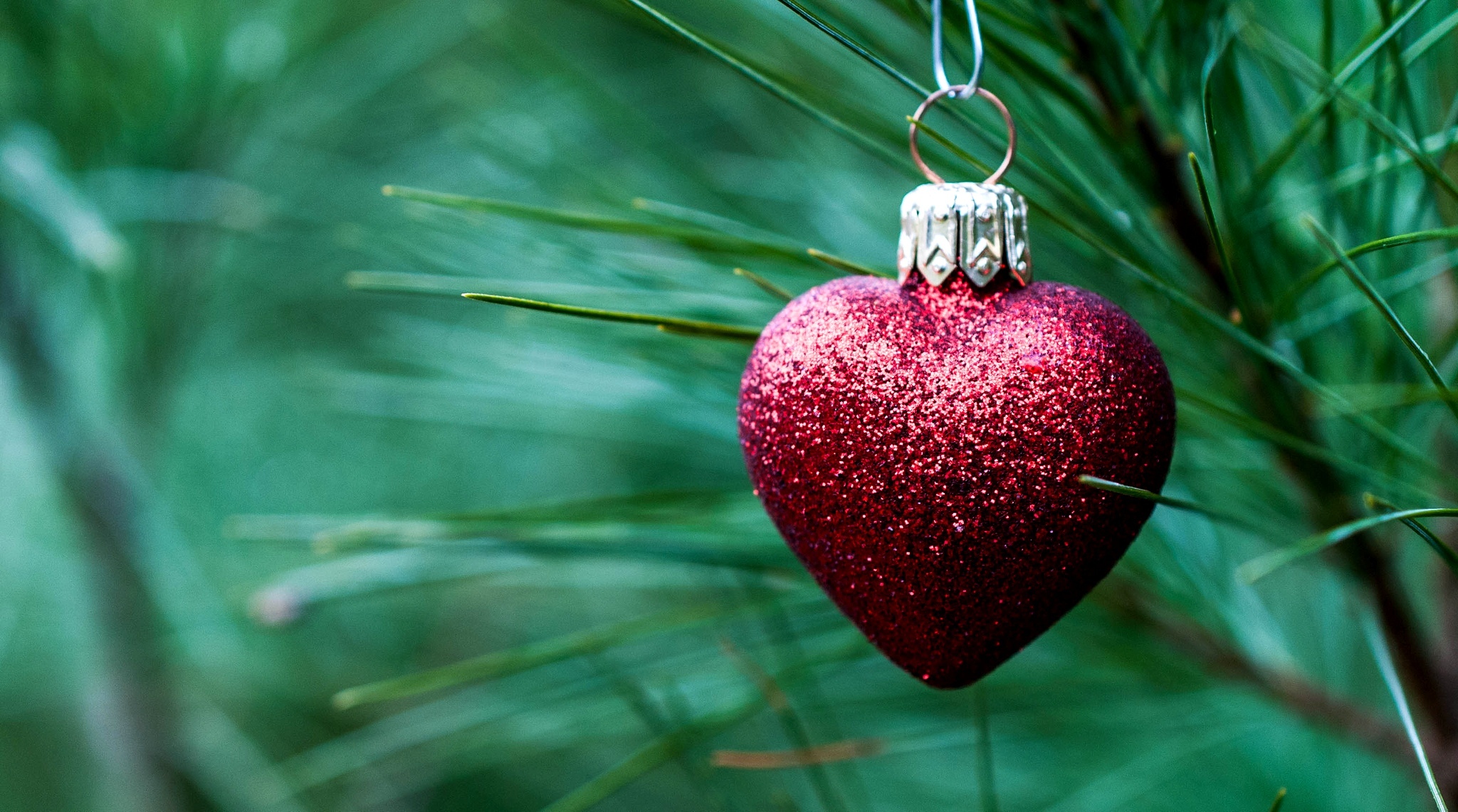
A #Sign of Love I found and held in my hand on Good Friday.







 ALISON KIRKPATRICK