carrie-mathison-homeland-15014-1280x800

 Let me begin my first post of 2013 by saying that I hate New Year’s Resolutions.  I never make them and I get uncomfortable when people begin to talk about them. It’s like talking to someone with a booger hanging out of his nose; it’s awkward and embarrassing for both of you. Personally, I can never find time over the holiday season to reflect on what truly needs to change in my life and how I am going to do it effectively and for the long-term. Who can think straight with eggnog, peanut M & Ms and sugar cookies at your fingertips? Companies don’t hold major strategy sessions in December. They hold parties and give bonuses! I try to be as kind to myself as I am to my employees, or would be if I had any.

 In that spirit, I am tabling any discussion of “resolutions” for a later date. Until then, let’s talk television.

One of my favorite shows of 2012 was “Homeland” on Showtime. If you haven’t seen it, let me summarize it briefly for you: Carrie Mathison, played by the fearsome Claire Danes, is a CIA agent, whose mission in life is to catch terrorists who want to attack her beloved USA. Carrie is tough, talented, insightful and excellent at her job. Carrie is also bi-polar, spotty about taking her medicine, and has recently undergone electro-shock therapy. I know it sounds crazy so far, but the writers make it work. The audience believes in Carrie, her insights and methods, because she is never wrong. When every Chief Knucklehead at the CIA doubts her decisions, or refuses to follow up on one of her leads, we all shake our heads in collective disbelief. Apart from willful obstinacy, why would you doubt someone who is always right?

Eric Deggens, a TV critic from Florida, named this phenomenon PDS: Persistent Disbelief Syndrome. He called it a cheap trick that good writers shouldn’t rely on. Its use isn’t limited to “Homeland” either. PDS is a mainstay of CBS’s “Elementary,” and USA’s “Psych,” among others. According to Deggens, there is no reason for characters who are so consistently right to be so consistently doubted. He concludes, “In the era of excellent series like ‘Mad Men’ and ‘Homeland,’ why do producers turn, time and again, to the simple crutch of Persistent Disbelief Syndrome?”

I think I know why and I don’t think it’s a cheap trick.

PDS isn’t just a storyteller’s gimmick. PDS lies at the core of human nature. We doubt what we can’t see for ourselves, what we don’t understand, what we didn’t discover on our own. There may be exceptions to the rule, but they are primarily limited to scientific principles.

No matter how many times I am right about directions, my husband still doubts my ability to get us there. No matter how many times Tim predicts trouble when our kids start to wrestle, I let it happen anyway, only to have clean up the wreckage shortly thereafter. No matter how many times we urge our kids to put on shoes before they go outside to play, they ignore us, only to frequently hobble back inside a few minutes later with a stubbed toe, or a bee sting in their heel.

Nowhere is Persistent Disbelief Syndrome more prevalent than in our relationship with God. The Hebrew Scriptures are rife with stories of the Israelites forgetting who Yahweh is and what Yahweh has done for them. From freeing them from slavery to sending them manna from heaven and water from a rock, the Israelites continued to doubt that God will care for them. The New Testament shows that the followers of Jesus do no better. Though Peter witnessed miracles, healings and conversions, and even the transfiguration, he still jumped ship the moment Jesus’ story took a dangerous turn. The Apostle “Doubting” Thomas could be the patron saint of PDS (though we might call it Perpetual Doubt Syndrome in his case).

Over and over again, the scriptures ask us to “Be not afraid,” but that is easier said than done. Fear dissipates only where trust prevails and sometimes, it is really, really hard to trust God. How many loved ones have we lost before their time? How many once-cherished beliefs have been stripped away? How many hopes and dreams have been unmet, leaving us disappointed and lost? Those are ripe conditions for PDS to flourish. When someone consistently disappoints our expectations, credibility becomes an issue, even if he, or she is never wrong about the one thing

To avoid chronic PDS, I have to remind myself frequently that I can trust God about the one thing. I have not yet faced a situation I could not deal with, an obstacle I could not surmount, a hardship I could not grow and learn from when I have trusted in and aligned myself with the power of Love. But it is still hard.

“Love never fails,” a wise man once wrote; what fails is our ability to trust in that Love. And when we doubt, like Carrie’s coworkers on “Homeland,” all hell breaks loose. We go after the wrong target; we leave dangerous people in trusted positions; we make poor decisions based on our own limited perspective. Relying on our own imagination to decide what’s possible, what’s good and just in every situation, we are bound to screw up. But if we can get past our PDS and trust the Love that always seems to get it right, we’ve got a shot at saving our hearts, our lives, and maybe even our very homeland.


During this season of joyful noise and celebrating, shopping and baking, my Christmas gift to you is silence.

There is so much to be done this time of year, so many things vying for your time and resources. When I thought about what I would like for Christmas, I knew it would be less – less of everything – and so I thought the kindest thing I could do is not add my too-many words to your already busy schedule. We are taking a couple weeks off, but let me leave you with this image.

Christmas collageOur house looks like Buddy, the elf, came and decorated. Kiko and Finn think it’s a little much, but Molly G is in heaven. She sleeps in her Santa hat and her snowflake footie pajamas. She turns on every twinkly light in the house whenever she walks in the door. Whether it’s too much or just right, I don’t care. Her Christmas energy could power a small city and I know it won’t last forever. I am savoring her enthusiasm and joy.

To balance out the Christmas crazy, I sit still by our tree in the silence of the early mornings. I center myself in Love and remember the best Advent advice I’ve ever heard:

Be a womb.

It’s the only way Love can be born. IF we can be open to something new, IF we can bear the growing pains that come from being stretched beyond our comfort zones, IF we can promise not to rush people and circumstances into what we want them to be, instead letting them gradually become who and what they are meant to be, IF we can do all this, we will bring Love into the world.

That is my goal for the next month: to be a womb, a warm, safe, life-giving place where Love is born.

Merry Christmas!

Christmas collage

“Be a womb” is courtesy of Loretta Ross-Gotta from her essay “To Be a Virgin.”

If you do want more words, I have a few excellent suggestions.

The first is an sermon called “Pregnant Old Ladies and Other Signs that God’s Story is Better Than the One We Tell Ourselves,” by the lovely and amazing Nadia Bolz-Weaver.

Occupy Advent is on Facebook and they are delivering a daily dose of inspiration, which is witty, irreverent and spiritual. I am so glad I “liked” their page.

Goat Rodeo: about the most polite term used by aviation people (and others in higher risk situations) to describe a scenario that requires about 100 things to go right at once if you intend to walk away from it. http://www.urbandictionary.com

Most mornings with Kiko feel like I’m at a Goat Rodeo. Today was no exception and unfortunately, no one walked away from it completely unscathed. She stormed out of the house to wait in the misty rain for her carpool; I went to check my computer. This is what I saw on Facebook:

Oh, if I had only known! But wait a minute. I did know. Though I hadn’t seen her midnight post (I go to bed around ten), I could tell from the moment she woke up that today was not a good day. It was her father who didn’t know and who brought this morning to such an unhappy conclusion.

Kiko has never been a morning person; adolescence has done nothing to improve the situation. The challenging curriculum at her all-girls prep school has only made it worse. She does homework until eleven or so and then takes an hour or two to unwind. Her alarm goes off (for the first of several times) at 6:30 AM.

Though I am a morning person, I’ve learned to adjust my expectations. I speak to her minimally. I am helpful when possible. I appreciate her good mornings, using those days to sneak in an extra hug, or kiss and chat about life. On bad days, I avoid her. I pack her lunch, pat her on the head and try to never, under any circumstances, overreact to her snide comments, deep sighs and tragicomical complaints.

Tim has no such compunction. I don’t know what got into him this morning, but as Keara lay on the couch, soaking up her last moments in a horizontal position before the incessant verticality of her day, he would not leave her alone. As the youngest child in his family, his internal switch is permanently set to “tease.” As the father in this home, he has a reasonable expectation for respect and response. While neither of these things are bad in and of themselves, (I appreciate them most of the time), they are not great in combination with an overly tired, teenage girl. I didn’t hear the details of their exchange, but he made one crack after another, which she either ignored, or “cracked” back, until she stormed out of the house.

Exasperated, I looked at him and he said, “I don’t know how you don’t engage when she is acting like that.” I started straightening couch cushions. “Don’t you think she’s being unreasonable?” I folded throw blankets. “Seriously, when someone is being such a donkey, how do you not try to get them to stop?” I began to rearrange the trinkets on the entryway table. He finally got it. “Oh, you do it just like you are doing it to me right now,” he said as he turned and stalked up the stairs.

Ugh. He caught me and I didn’t even realize I was doing it. I was frustrated at him for messing with Kiko, but I didn’t have to ignore him as if he were a cranky, petulant teen. I could have engaged in conversation with him about his concerns. I could have empathized with his pain and his desire to connect with her. I could have recognized that he only wanted to be a good dad, to make her laugh, to start her day on a better note.

But instead of acknowledging any of that, I was smug and if there is one thing I hate being, that’s it. Cathleen Falsani wrote one of my favorite blogs of 2012, called “Deliver Us From Smugness.” If you have time, you should read the whole thing, but one line in particular has stayed with me on an almost daily basis. She writes,

“The opposite of love is smug.”

She goes on to explain that “To be smug is to be excessively proud of your achievements and successes. Conceited. Arrogant. Complacently self-satisfied.”

This morning I was smug with the man I love. I was excessively proud of how I wrangle the Goat Rodeo that is Kiko and her morning routine, instead of humbly grateful that I have crashed and burned enough times to know when and how to walk away.

So Tim, I hope you’ll forgive my smugness. It is the opposite of Love and Love is the one thing I want to be, every day, in every way possible.


As per our family agreement, this blog was read and approved by both parties involved in this morning’s Goat Rodeo. 

My cousin and fellow blogger, Allison Sebastiani, recently started a campaign called Gratitude Mondays. Each week, she publicly thanks someone who has had an impact on her life. I loved her idea, but I didn’t make a public promise to do the same. It was a nice invitation, but I didn’t think it was meant for me. I was wrong. Before the week was out, I received my very own invitation made up of one part coincidence, two parts gratitude, and whatever parts are left over to humility.

The kids and I were visiting Huntington Beach last weekend and my brother invited us to go to church with his family on Sunday evening. As I sat in the back row of St. Bonaventure Catholic Church, my mind drifted to memories of a boy I used to know. He was tall, redheaded, freckle-faced, funny, sweet and kind. He wasn’t just any boy. He was my date to junior prom and senior homecoming, though not my date to anything in between. As teenage girls are known to do, I liked him and then I didn’t. I wanted to go out with him and then “something suddenly came up.” I am not proud of the way I handled my friendship with him, but at the time, it seemed perfectly acceptable. At 17, hormones and emotions ruled the day.

As I sat in his childhood parish, Allison’s “Thank You” challenge came to mind and I was overwhelmed with gratitude for this now 40-year-old man, whom I hadn’t seen in over twenty years. I never planned to write this blog, but I knew what I would like to tell him if I ever got a chance. I would like to tell him that he holds a place in my heart as one of the kindest gentlemen I have ever met. He was my first model of what a gentle man is and what a gentle man does, a model I used to judge just about every man I dated after him. (Thank goodness Tim passed with flying colors!) I would like this man to know that his smile made my day, day after day, at Mater Dei. I would like him to know that his quirky sense of humor, his ability to be himself, his kindness to his family, friends and strangers were all things I appreciated about him. I would like him to know that being asked to those dances, getting dressed up and spending those evenings with him are some of my fondest high school memories.

At one point in our friendship, he gave me a picture of himself as a toddler and from that moment on, I always hoped to have a redheaded, freckle-faced little boy of my own. Though I never got the hair, Finn’s freckles are part of what makes him my pride and joy.

So as I sat and kneeled and stood and sang, my heart filled up like a helium balloon with thankfulness for who this man was and the role he played in my teenage life. He was just so good and I wondered how I could track him down and tell him so.

But of course, I didn’t have to. As I walked into the communion aisle, who was coming out of the pew directly across from me at the exact same time? My redheaded friend, of course! I about jumped out of my skin I was so excited. I mean, GOD IS GOOD! This is the invitation I had been waiting for – the chance to tell him all the things I want him to know! This is awesome, I thought to myself and then I immediately punched him in the arm to get his attention, just like I used to in high school. He looked up from his holy reverie, shocked, because really, no one expects to get punched in the communion line, but come on! It’s been twenty years! He looked at me with really big eyes and kind of half-smiled and then returned his focus to the little space in front of him, occupied by his wife and their 3 young children. He seemed a little nonplussed to see me after so long, but that’s okay, I thought, because he doesn’t know what’s coming! He doesn’t know that I have a heart full of gratitude and a bunch of nice things to say to his wife about him. He doesn’t know any of that, but as soon as mass is over, he will!  

I kept an eye on him to find where they were sitting. I planned to run over as soon as the last song ended. I pointed him out to my kids, who have seen his picture in old photo albums. Keara giggled and said, “That’s your ginger, mom?” with a huge smile on her face. They were excited to meet an old friend of mine.

But a funny thing happened before the last song ended. He left! He and his wife and his three darling, freckle-faced kids walked out of the building, without once looking my way to even nod, or wave goodbye. And as I watched them walk away, all the air got sucked out of my helium balloon of happiness. I went from walking on air to concrete boots. Part of it was that I wouldn’t have a chance to express my gratitude, but part of it was my wounded pride. In my fervor, I assumed my feelings would be reciprocated, at least in some small way. Though I didn’t expect the same level of excitement, I thought I might generate a friendly feeling, or maybe even a glimmer of curiosity about what I’d been up to all this time. And although I can’t know for sure what was going on in his mind, I don’t think I warranted a second thought. And that makes me sad, but it doesn’t make me any less thankful, which is why I’m writing this blog.

I wish I could tell you his name and post our prom picture, so I could give him the credit I think he deserves. I wish I could use social media to track him down, but after the way our chance encounter played out, I have a feeling the publicity wouldn’t be welcome. Back in high school, our song was the 80s hit “I’d Melt With You,” but apparently it’s been replaced by Gotye’s “Somebody That I Used to Know.” He might like it better, but I don’t think it has quite the same ring to it.

What I need to remember is that gratitude is a gift – to us. It makes our hearts larger, softer and more open to life. It makes us bigger, kinder, more positive people. Expressions of gratitude are a gift we give to other people and as gifts, they can be accepted or rejected. We can’t force it down their throat. A lot depends on who’s offering, but it doesn’t change the fact that the attitude of gratitude (pardon the cliché) is what’s most important.

I limped out of St. Bonaventure with my thwarted plans and busted-up ego. I called Tim and told him the story and he laughed with (or at) me (I’m not sure) and I felt better. I had dinner with my kids, my parents and my lovely little nieces. I laughed and loved and was grateful for their company and I was able to tell them so. I hope someday to be able to tell my redheaded friend as well, but first I have to make him stick around long enough to listen to me.

A friend posted this on my wall yesterday morning, the day after the election.

None of my bloggers touch the topic of Politics. I am really needing one of you to post something inspiring this morning. I understand why you don’t but I am really dying for some words of wisdom to hang on too… I don’t even care what you voted for. Just some overall words to live by either way… ok, I am done pleading!

I wishI had some soothing balm to apply to her soul. She is a compassionate conservative, a lovely young woman, in a liberal bastion of Northern California and I think things got pretty nasty in her neck of the woods.

I’ve sat with her request for 24 hours and I still don’t have much, but like The Beatles offered in Can’t Buy Me Love, “What I’ve got, I’ll give to you.”

“I’m sorry you have been feeling so much pressure. I am sorry your blue friends and neighbors aren’t being kindly, compassionate, good winners. I am sorry if your red family and friends are being poor sports. For the most part, I’ve been able to avoid it down here. I make it a pretty hard and fast rule that I don’t talk politics with anyone I might want to like the next day – that goes for family as well.

People who feel strongly about their party affiliations make me extremely uncomfortable. They have ever since I was about 16 years old and figured out that I didn’t, in fact, have all the answers to the world’s problems. It seems to me that the party ideologues still haven’t figured that out yet. I think people who post rabid support for one party, or one candidate are fooling themselves. I try to never get caught up in politics, because it is almost always synonymous with hypocrisy.

  • No matter who gets elected, the first ones taken care of are the biggest financial backers.  Every party looks out for their own.
  • The candidates promise the moon and the stars, with no hope of delivering anything resembling those celestial bodies. If we are lucky, the average citizens get covered in the dust.
  • Everyone talks about the need for bipartisanship, but no one wants to play.
  • People are so wrapped up in their own ideologies that they can’t see what is good, right, or even reasonable in the other point of view.
  • To win, transparency and honesty are impossible for the candidates to uphold and therefore, they are impossible for me to know, or trust.

I recognize in myself all these pitfalls. I know I am capable of getting drawn into these same behaviors and emotions, which is why I don’t engage in politics with anyone, ever, if I can help it. I try to take a wider view (for which my father will call me a Pollyanna).

I believe that Barack Obama and Mitt Romney are both good, decent men. They love God (as they know him); they love their country and they love their families. In their own way, they have served those ideals faithfully throughout their lives, along with those in need in our country and the world beyond. They might define “need” differently, but they looked to something larger than themselves upon which to base their lives and their work. Their attempts have earned my respect and though I despise the political rhetoric they both spewed during the election season when pandering to their party’s core, they have not quite lost it.

I do not know where America will end up. I know it cannot go back to the time where the WASPs ruled and everyone else fell to the back of the line. It breaks my heart to think that we might go the direction of European socialism, and the financial dependency and apathy that goes with it. I hope we Americans can find a way to reinvent our nation, and ourselves like we did over 200 years ago. Ultimately, I know that screaming, shouting and denigrating our political opponents will bring about NOTHING good. I can only vote with my conscience and do my best to live out the values that I profess to believe in: faith, hope and Love.”

My book group just finished reading Wild, by Cheryl Strayed. I found it disturbing, frustrating and beautiful, in that order. Wild is an autobiography of a woman who does a solo hike across the Pacific Coast Trail. As Cheryl nears the end of her journey along the PCT, she encounters Crater Lake, whose creation story is a perfect metaphor for what has happened in her life and so many of our own.

Mount Mazama was located in the Cascade Mountain Range in Oregon. At one point it had reached almost 12,000 feet high. It was a natural skyscraper: beautiful, majestic, impressive. Only the ancient Klamath tribes of that area ever witnessed how it towered over its neighboring peaks, like Mount Washington, Jefferson and Hood.

Up until 8,000 years ago, the presence of Mount Mazama was a fact of the skyline, a place you could count on to be there, like the Pacific Ocean, the Rocky Mountains, the nose on the end of your face.

It was there for hundreds of thousands of years, and then one day, it wasn’t.

Underneath its purple mountain’s majesty was a seething mass of heat, a cauldron of change, an eruption waiting to happen.

Mount Mazama wasn’t just a mountain after all. It was a volcano and when it erupted, what had been permanent was gone. What had been high was made lower than low. It wasn’t just leveled. It was cratered out.

The native peoples must have wept and trembled for what had been, for what they had seen, and for all that had been lost in the cataclysmic change.

How long did it take their eyes to adjust to the emptiness that had once been something? How long did it take them to pick up the pieces? How long did they look with disdain at the wound that had once been their mountain?

But the death of the mountain isn’t the end of the story, not for Mazama, not for Cheryl Strayed and not for you and me.

Invitations keep showing up in my mental mailbox these days to see changes in my life with a new set of eyes. The pattern of Mount Mazama keeps repeating itself over and over again.

What we think is the ending, is just a new beginning.

What we think is destruction is really a transition.

What we think is broken will be made whole again – not in the same form, but in some different and life-giving way.

The real bummer is that it takes longer than we want it too. We have to be patient. We have to wait. We have to hold on.

In my spiritual tradition, we talk a lot about the three days from Good Friday to Easter Sunday. Even Rob Bell, who I saw at a conference this last week, emphasized how much patience and perseverance it takes to get from Friday to Sunday.  But I am not talking about three days here.

While “three days” are a great scriptural metaphor, they are a lousy model for how patient we actually need to be.

What changes in our lives actually resolve themselves in three days? For most of us, the disruptions in our lives take a lot longer than that to heal. For Cheryl, for you and me, it usually takes more like years to acknowledge and accept that what we thought was permanent was actually a passing formation.

But if it takes years, we’re still lucky. It took centuries for Mount Mazama to become Crater Lake.

When the holy mountaintop blew up, all that was left was a sharp-edged, gaping crater. But season after season, year after year, the caldera started to fill with rain and snowpack and spring melts. Centuries later, Crater Lake is the deepest lake in America at 1,900 feet and one of the deepest in the world. It is so deep that it absorbs every other color but blue.

I have never seen it, but I will take Cheryl’s word for it as she gazed upon the silence and stillness of the water, that it is a beautiful, sacred center, found in nature, in her and in all of us: “what a mountain and a wasteland and an empty bowl turn into after the healing begins.”

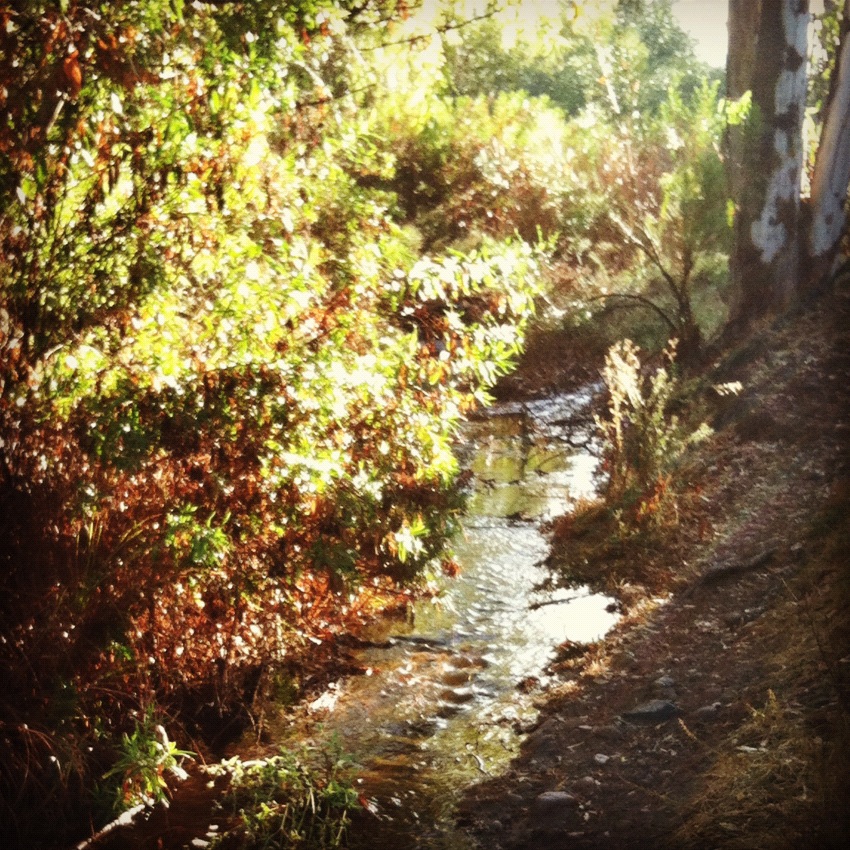
I went for a walk in the canyon this morning after our first precipitation of the fall. It hasn’t rained since last spring and in my walks I’ve watched the progression of the canyon from lush, damp and green to dry, brittle and dirty. I’ve watched the little creeks and ponds dry up and disappear, leaving pathways and piles of round stones, their colors fading from mossy brown and green to faded rust and grey. A film of dust covers everything. In the late summer, nothing is beautiful in the canyon, even though it’s the time of year I love best. I still walk there, but with less eagerness and only in the early morning. When I inhale the scent of the summer canyon, I feel the sharp bite of the dry heat and not much else.

But today, when I woke to the sound of rain, my first thought was to get out and go. As soon as the sun peeked through the clouds and the kids were off, I headed to the canyon. Before I even reached the entry, I could smell the difference. The eucalyptus, the sage, the water, the smell of rain, damp earth and mud are a powerful elixir. I breathed it in with delight, as I walked down the squishy slope before me.

The difference was incredible. An hour or two of rain had transformed the canyon into something new. The aridity was gone.

The streams were back, at least temporarily. Paths I had walked yesterday were no longer available to me. I had to fix a little footbridge that had been washed out in the rain (It may only be a 10-foot-long 2×6 from someone’s yard, but still, I had to go dig it out of the weeds where it had floated). And even though it was no longer raining, every step I took brought water to me, from the treetops overhead, the bushes at my sides, and the puddles underfoot. Every step I took brought me another sign of love. Like the rest of the canyon, my #signs of love had dried up this summer, obscured by a coat of grime, but today they were washed clean. They were vibrant in their natural state. I took a few pictures to share with you. There are more on the #Signs page.


I know it’s a cliché to talk about how the seasons of our lives parallel the seasons of the year. I know it, and yet, I have to say it again, because I saw something new today. The season I like best, the summer, does nothing for the canyon (biologists – work with me here. I am sure it does something, but I am talking about aesthetics here). The season I like least with its rain, cool air, and short days makes the canyon beautiful. Hmm… There’s some logic to apply to my life. I need to welcome each season, and each rainy day, no matter how much I would like to avoid them. I need to remember that they will bring something beautiful to my life. Today helped me see that the season I love most fiercely, the season I wish would last forever, will do the most damage if I cling to it for too long.

With that in mind, I say bring on the rain; bring on the fall. I’ve got scarves and jackets and polka-dotted galoshes to keep me warm and dry. I’ve got memories of summer to last a lifetime. And if it turns around next week and we get 85 degree weather, like I’ve been told it might, I will enjoy it, but I will also let it go when the time comes.

Based on the assumption that I am failing to meet everyone’s expectations, I find myself saying “sorry” all the time. Though I still know I am ‘enough,’ at least on a cosmic level, in an every day, nuts-and-bolts kind of way, I often feel like I am falling short. As a result, I find myself apologizing all the time, and quite frankly, I am sick of saying “I’m sorry!”

I say sorry to God if I get distracted during my prayers. I say sorry to Tim if I haven’t shaved my legs in a few days (oh, let’s be honest, a week or two). I say sorry to my kids when I run out of their favorite breakfast foods. I say sorry as I head out the door to work and sorry if I get home late.  I say sorry I can’t buy you that; sorry I can’t donate more; sorry I can’t stay later; sorry I can’t talk; sorry I can’t show up at all. Sorry! Sorry! Sorry!

Does anyone else have this problem?

One of my all time favorite lines from Seinfeld is from their trip to India. George and Jerry get in an argument and although Jerry apologizes profusely, George is having none of it. He is so mad, he spits out, “You can stuff your sorries in a sack, mister!”

That is what I would like to do with all my sorries. I’d like to stuff them in a sack, take them down to the river and drown them.

I am not even sure what all my sorries mean. An apology should be offered to a party who has been wronged by one of your actions, or choices, so when did I start thinking that saying “No” was a synonym for wrongdoing? When did I start thinking that my not-so-terrible choices warrant an apology?

Today, I am making a pledge to not say, “I’m sorry.” Just for today, I am banishing that word from my vocabulary. If I make a real mistake, then I will apologize, but I will not use that word.

From here on out, I will not allow “Sorry!” to be my automatic response every time I cannot be every thing to every body.

Writing that last line, I have my “aha” moment. How in the world did I get it in my head that I could be everything to everybody all the time?

Will you please excuse me while I go take off this messiah complex and slip into something more comfortable?

Ah, my own skin, much better.

It’s clear how closely my sorries are tied to my Superego. Psychologists say that’s the part of us that aims for perfection. I say it’s the part of us that believes we need to be ‘super.’ Author Rob Bell writes that we each have a “Super,” living inside of us: a super-mother, a super-man, a super-worker, a super-volunteer. You get the picture. (He also writes that we should take it out back and shoot it. It’s the only way we will ever be free.)

When we are young, we are simply ourselves, but the “Supers” come on hard and fast. As a kid, I needed to be a “Super-student,” able to get straight A’s in a single bound. As a teen, I secretly wanted to be a “Super-model.” As a young wife and mother, I aimed for “Super-woman,” a perfect balance of Martha Stewart, Mother Goose and Playboy bunny.  The avalanche of sorries that come out of my mouth are a clue that I’ve finally maxed out. Instead of dropping one impossible image of perfection for the next, I’ve just kept piling them on. Currently, I’m trying to add one more (as yet undefined) “Super-something” to the mix and I’m just not up to the task.

Repeating “Sorry” is my coping mechanism, but I’m willing to try something new. The next time I want to say, “Sorry,” I am going to smile instead. I am going to repeat a mantra I picked up from the poetic Anthony de Mello, SJ.

“Behold God beholding you… and smiling.”

It reminds me that I do not need to be perfect. That good really is good enough. That whatever else I do, or don’t do, God is smiling at me (and at you too.) I can drop the mask. There is only Ali, and I don’t need to apologize for being human, for having limited time, talent, or treasure. I have a feeling that if I can remember to smile, instead of reaching for that all-too-easy “sorry,” it will feel absolutely super.

Hi All

I know it’s been a while since I last posted a blog. It’s not because I haven’t been thinking of you; I think of you every day, but I haven’t been sure what to say. Last month, I had some huge things to get off my chest about being honest and my fear of growing old. And this month, I had some huge things to do, like getting back into a classroom after a 10-year hiatus. I had to remember how to stand up in front of an audience for 3 hours, 2x a week and convince them that something they hate is something worth loving. I have to show them that something that is really hard to do can actually get easier if you work really hard at it. Sounds like an oxymoron and that’s what I feel like up there sometimes – a moron.

As you can imagine, I’m not a typical college professor, who takes herself too seriously. I’m just me, which means I’m silly and irreverent, but somehow underneath it all, educated, informed, intelligent and very good at what I do. While I might not take myself too seriously, I take my job seriously. I want to help young women and men become more proficient writers and better communicators. I want to help them breathe a little easier when they get handed an assignment, no matter what class, or job they’re in.

But transitioning from working at home to working at night has been a little shaky at times. The prep time, the paper grading, the rush hour traffic has put a serious crunch on my time.

It isn’t that I don’t have time to write; it’s that I don’t have the time to think about what to say. For me, this blog is a natural extension of my “thinking” time, my “praying” time, and my “being” time and there is a lot less time for those things. I am still getting up early; I am still spending some quiet moments with G each morning, but the thoughts that usually come from that time are fewer and farther between. My mind is on a writer’s strike. It wants more vacation days.

I was talking to my friend J the other day about not knowing where my life was going. There is a lot going on, but not in any one direction and she said a funny thing to me.

She said,

“If you don’t know where to go, pay attention to where you’re invited.”

Hmmm…

I’d never thought of that before. Where am I being invited? Not parties, of course, but in life. What opportunities are being extended? What is being asked of me? What is being offered?

She suggested I look for patterns, to see where one invitation led to another and another and another. The universe is always evolving, always moving towards something good. We are a part of that evolution somehow. The more we say, “Yes” to invitations, the more we are co-creating.

The tricky part is discerning which invitations are the right ones – the life events we are actually supposed to show up for. Too often, I think we end up crashing someone else’s party.

Deep in our hearts, we know which invitations are the right ones, the ones we truly want to accept, but most us stick with our gut response, trusting the guilt that makes us say, “Yes!” to everyone and everything, or the fear that makes us say, “No!” to even the most beautiful, and transformative opportunities. (For the record, I’m a yes man, while Tim’s a solid no.)

It was with this idea of invitation in mind that I said, “Yes” to teaching English 101 for Vincennes University at Balboa Naval Hospital. My heart wanted to meet and know the enlisted, the veterans and the wounded warriors who would be my students. Tim didn’t really understand it (a lot of work for a little money), but it wasn’t his invitation. It was mine. And though it meant saying no to several other things, it felt like an invitation I couldn’t refuse and didn’t really want to.

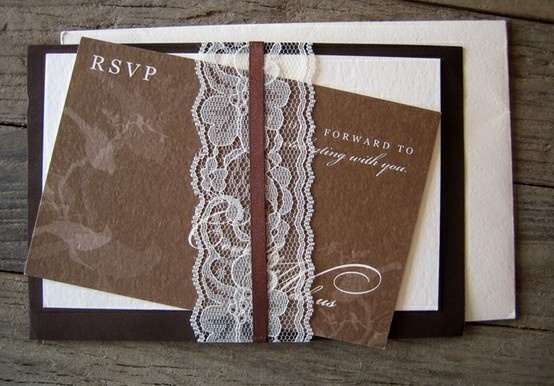
I’m looking and listening for invitations every day and when I opened up Facebook this morning, there one was, front and center from my “friend,” Glennon on Momastery. She sends out these amazing invitations, huge, fancy, hand-written ones, the kind that make you feel like if you don’t go, you might be missing the party of the year.

But I need to remember; it’s just an invitation, like any other. It might be right for me, or it might be just right for you, so I thought I’d pass it along, just in case you didn’t get one directly from her. Don’t RSVP yes or no based on guilt, or fear. Check out the link and listen to your heart.

Read Glennon’s fancy, photographic invitation here.

Did your heart start to beat faster when you heard the stories?

Did a face, a smile, a word connect with something deep inside you?

Did you just discover that this is something that really matters to you?

Because that’s what the right invitation does. It gives you an opportunity to participate, to co-create, to bring about something new and good in this world.

And when you do it, God looks around and smiles and says, “This is good.”

Just as I was sitting down to write this blog, I happened to check Facebook and find a post by one of my favorite bloggers in the world, Glennon Melton, and I almost stopped writing RIGHT THERE, as in RIGHT NOW, as in FOREVER, because Glennon has a way of writing that makes me think, “Why do I even bother? Glennon says everything I want to say, but she says it so much better!” Now, if you go to Glennon’s post from today, you might possibly wonder why I would want to say that and today, I don’t, but there are lots of other times when she does, like here and here.

But then I remembered something that Glennon said last month as she was reading a book by Cheryl Strayed,

Dear God, she’s amazing. And I felt myself start to panic a little. OH MY GOD. SHE’S SAYING ALL THE THINGS I WANT TO SAY, BUT BETTER.  I actually thought about CLOSING her book and NOT reading anymore because my heart was panicking and shriveling a bit.

Sometimes, that’s honestly how I feel when I read Glennon, or Anne Lamott, or Paula D’Arcy, but then they go on and on about grace and abundance and then I breathe deeply, and then G (the Big G upstairs) reminds me that I am enough and that I believe in Love and then I can finally try to write again.

So I’m back and ready to tell you a story about my weekend.

It was a hot weekend here in San Diego, like hot hot, like “Texas-hot,” as my kids like to say. They’ve only been there a handful of times, but boy, do they remember. We are also in the midst of soccer season, which means our family had four games in two days. Tim is the manager of The Lad’s team, so we got to set up goals once, take down goals twice, pay the refs, and turn in the scores. Along with all the other parents, we also got to cheer on the sidelines.

Those sidelines were a mass of brightly-colored umbrellas, beach chairs, water bottles and spray fans. There were canopies and sunshades and baseball hats – anything and everything that could provide some relief for the humanity that was slow-roasting in the heat. A friend of mine turned to me and said, “Surely, there is a blog in here somewhere.” And so I looked around to see what I could see.

I saw kids, and I saw parents. I saw players running, kicking and heading. I saw goalies diving, missing, and saving. I saw coaches coaching, cheering and scolding. I saw it all, but nothing that you wouldn’t expect on any given “Soccer Saturday in the Suburbs,” as Tim likes to call it.

So I kept watching Finn’s game, until I was distracted by a commotion happening behind my chair.

As you can imagine, making shade on a weekend like this is serious business. The fans want to be comfortable, but we also want to provide some protection for our players as well. I’m not talking about the players on the field, who were out competing in the sun; I’m talking about the guys on the sidelines, the subs who were resting up to get into, or back into the game.

These 13 and 14 year old young men WOULD NOT STAY IN THE SHADE and it was comical to watch the parents do everything they could to make them, without actually making them.

When the boys were smaller, keeping them in the shade was an easy thing to do. Someone would bring a pop-up tent and someone else would bring a blanket and the team mom would tell them to sit on it and they would. Job done. But as they got older, they wanted to be up on their feet, standing by their coach, or sitting on a chair, and our job got a little harder, but we could shoo them back under the canopy and there they would stay.

But now these boys are young men and we can’t shoo them anywhere. They stand where they want to stand, where their coach asks them, tells them, or allows them to stand. It is no longer our place to tell them where to stay anymore. Their autonomy certainly doesn’t keep us from wanting to protect, however and that is where it gets comical. Each time the subs would move, a parent would move an umbrella with them. It is no easy task to get an umbrella stake into hard-packed dirt, so a mom, or dad would spend a couple minutes twisting, stomping and pushing the sun-protection into the ground. The players would stay put for about 30 seconds and then move on. Parents would wait a minute or two, hoping the players would realize their mistake and come back to the shade. They rarely did, but if they came back, it was instinctively, or by accident, never by conscious choice. Eventually, another parent would jump up and move the umbrella to the new spot and get it settled and then the boys would move on again. This went on for a good 30 minutes, or so before we finally just gave up and followed them up and down the field, like little rajas, holding the shade over them, because really, WE JUST COULDN’T LET GO.

This was the life lesson I was waiting for.

As parents, we want to protect our children. When they’re small, we know what’s best for them, and we can provide it, whether it’s shade on the soccer field, or restrictions on the television. We put a jacket on them when it’s cold, and sunscreen when it’s hot. But as they get older, we think we know what’s best for them and we struggle to provide it, whether they want it or not. The older they get, the more often they are going to step out of the shade we provide. We can twist and push and stomp all we want, but that doesn’t mean they are going to stay put. Our wisdom and support only serve a purpose when our children choose to stand under it.

I cannot follow my almost-grown children up and down the sidelines of their lives, trying to “protect” them from every element that might sap their strength, or burn them a little bit. (Thank goodness I still have Molly to shoo back under the canopy.) Keara and Finn need to be able to move freely, mix it up, and hear what’s happening on the field. They don’t need to be hampered by their well-intentioned mother, telling them to back up, sit down and take it easy. Champions are made in the full light of sun and I need to be brave enough to let them take their place in it.

P.S. We saw a lot of soccer this weekend and a lot of parents, who took great pains to keep their children cool and hydrated on a hot day. Kudos to you. I am not speaking of any one team, or parent. The only parent I am calling out is myself!